鄂州观音阁, Buddhist pavilion on Long River in Ezhou, China
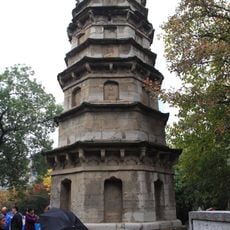
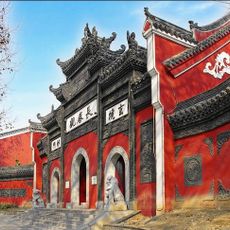
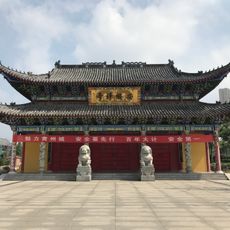
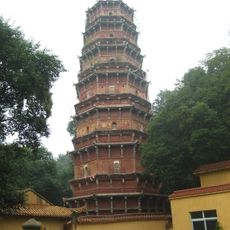
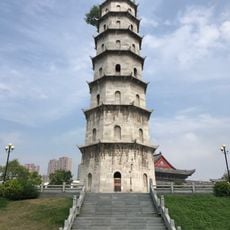
The Guanyin Pavilion is a religious structure sitting on the Yangtze River in Ezhou, built with stone foundations and blue brick that rise across several levels. The building displays typical elements of classical Chinese architecture from its era.
A temple occupied this site since the Song Dynasty, but the current building was erected during the Yuan Dynasty. This reconstruction shows how the location remained important to the community across different historical periods.
The temple combines Buddhist and Taoist worship: it first housed only Dongfang Shuo, and statues of Guanyin and Laojun were added later. The Guanyin Hall holds a plaque inscribed "Longpan Xiaodu" by Huguang governor Guanwen, and the Laojun Hall a "Ziqi Donglai" plaque above statues of the Jade Emperor, Taishang Laojun and Xiwangmu.
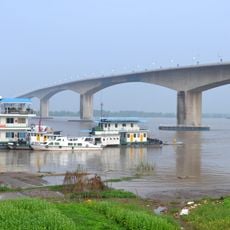
The temple stands on Longpan Rock in the Yangtze, outside Xiaodong Gate in Echeng District, Ezhou. The rock and its buildings are exposed at low water; during high water the temple can be surrounded by the river, so check river levels before planning a close look. The site is a protected monument, with a buffer zone extending 15 m east and west and 10 m north and south from the outer walls.
The temple's Lotus Well, carved from red sandstone between the Guanyin and Laojun halls, holds water at a level that stays above the Yangtze's surface year-round. The complex also preserves a stele inscribed with the Record of Rebuilding Guanyin Pavilion beside the Guanyin hall door.
The community of curious travelers
AroundUs brings together thousands of curated places, local tips, and hidden gems, enriched daily by 93,132 contributors worldwide.