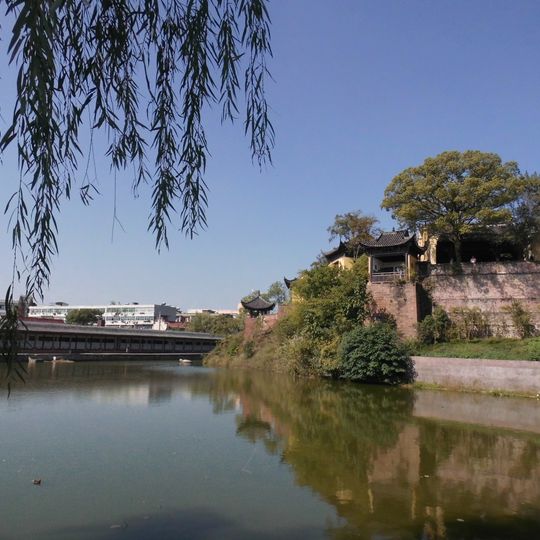
Dongpo Chibi, Historical site and cultural heritage in Huanggang, China
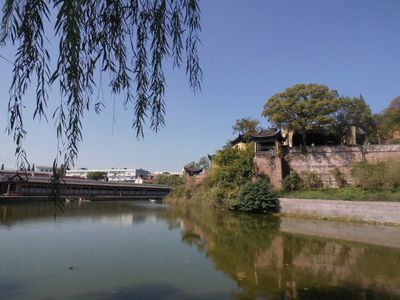
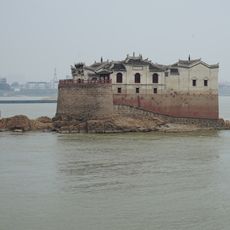
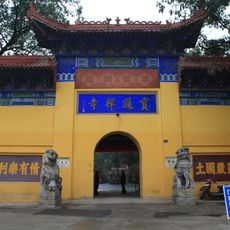
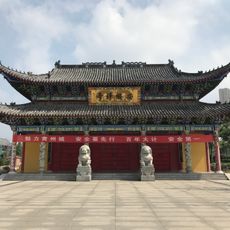
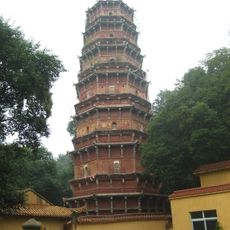
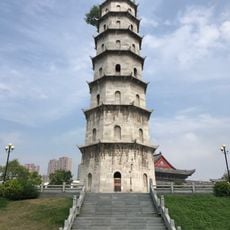
Dongpo Chibi is a red-brown rock hill in Huangzhou District, Huanggang, Hubei, on the former north bank of the Yangtze; silt has since left it several hundred metres from the river. Its surviving halls and pavilions were mostly rebuilt in 1868 under prefect Yingqi, and 139 rubbings of Su Shi's calligraphy are set into the buildings.
The site held military importance across several Chinese dynasties and later became closely linked with Song Dynasty poet Su Shi. His literary works transformed this location into a symbol of how nature and written expression were intertwined in classical Chinese culture.
The site preserves over a hundred stone inscriptions carved with poetry by Su Shi, showing how writers and scholars have long connected their work to this riverside location.
The site stands on Gongyuan Road in the northwest of Huangzhou District, Huanggang, Hubei. The Red Cliff is now several hundred metres from the Yangtze, so the cliff does not rise from the water's edge. The protected zone runs east to Ruanjia Liangting Road, west to Chibi Lake Road, south to the junction of Poxian Road and Gongyuan Road, and north to Dongpo Xuetang.
The cliff is now several hundred metres from the Yangtze, cut off by silt deposits; in Su Shi's day the river ran at its foot. The reddish-brown rock gave the site its old names, Red Cliff and Red Bank, and the popular name Red Nose Rock. The 139 rubbings of Su Shi's calligraphy that Yang Shoujing had recut in the late Qing are set into the pavilions.
The community of curious travelers
AroundUs brings together thousands of curated places, local tips, and hidden gems, enriched daily by 93,933 contributors worldwide.