Heliopolis, Archaeological site and ancient sanctuary in Cairo, Egypt
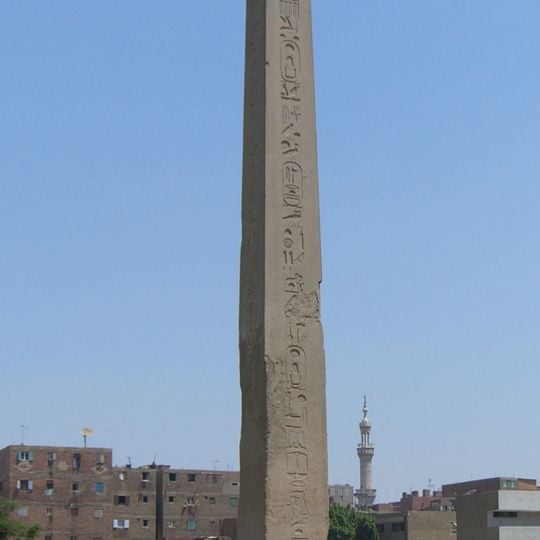
Heliopolis is an archaeological site and former sanctuary in Cairo, Egypt, with remains lying beneath the modern districts of Al-Matariyyah and Ain Shams. The most visible part of the ancient complex today is a standing red granite obelisk originally from the Temple of Ra-Atum, raised during Dynasty XII.
Occupied since prehistoric times, Heliopolis was capital of the 13th nome of Lower Egypt and the main cult centre of Atum, later identified with Ra. It expanded under the Old and Middle Kingdoms, and Akhenaten built a temple to Aten here in the 18th Dynasty. Sacked by the Persians in 525 and 343 BC, it was largely deserted when Strabo visited in the 1st century BC.
The place took its name from the worship of the sun god Ra, venerated here together with the creator deity Atum. Greek scholars later gave the city the name Heliopolis, meaning City of the Sun, reflecting its religious importance.
The site lies today within residential areas where excavations continue to uncover new elements and architectural fragments. Visitors find the obelisk in Al-Matariyyah, a district east of central Cairo.
Two obelisks from this city now stand along the Thames in London and in Central Park in New York. They are often called Cleopatra's Needles, though they were created centuries before her time.
The community of curious travelers
AroundUs brings together thousands of curated places, local tips, and hidden gems, enriched daily by 93,180 contributors worldwide.