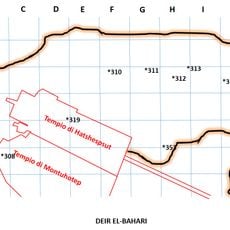
Deir el-Bahari, Archaeological site in Luxor, Egypt.
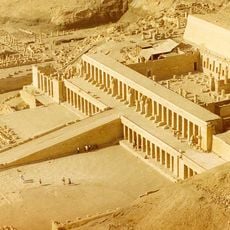
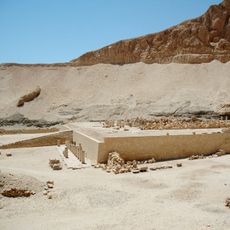
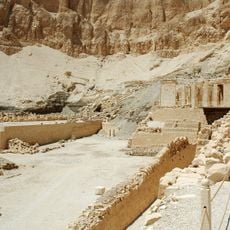
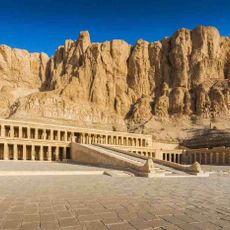
Deir el-Bahari is a mortuary temple complex on the west bank of the Nile at Luxor, built in three broad terraces against a sheer cliff. The lowest level has a wide platform with a colonnade of rectangular pillars; the middle level carries a long row of square columns reached by a central ramp; a narrower upper colonnade sits beneath the rock face. The main temple, Djeser-Djeseru, was designed by Senenmut for Hatshepsut.
The site's first monument was the terraced mortuary temple of Pharaoh Mentuhotep II of the 11th Dynasty, built around 2061–2010 BCE to mark Egypt's reunification. Queen Hatshepsut of the 18th Dynasty raised her temple Djeser-Djeseru beside it, designed by her steward Senenmut, after demolishing the nearby temple of Amenhotep I. Thutmose III later added the small temple Djeser-Akhet above hers.
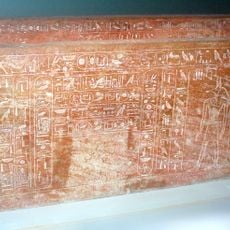
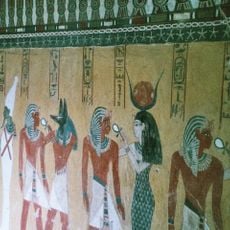
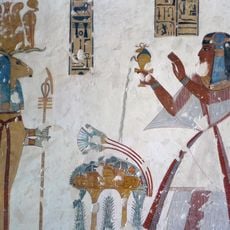
The reliefs in Hatshepsut's temple depict her divine birth and the trading expedition she sent to the land of Punt, shown with ships, goods and the Puntite queen. The site was sacred to Hathor before any temple was built; her chapel here has columns carved with the goddess's face.
The site is open daily and can be explored on foot, with wide ramps providing access between the terraces. Visitors should arrive early to avoid heat and have time to walk through the carved chambers and halls.
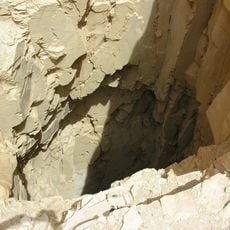
In 1881, workers discovered a hidden chamber containing dozens of royal mummies, including some of Egypt's most famous pharaohs. The find was one of the largest treasures from ancient Egypt and changed how we understand that era.
The community of curious travelers
AroundUs brings together thousands of curated places, local tips, and hidden gems, enriched daily by 93,173 contributors worldwide.