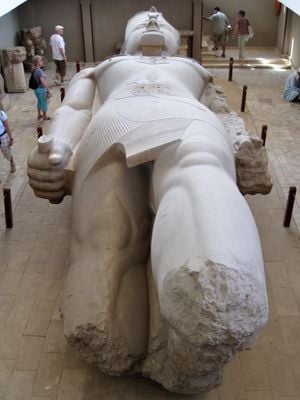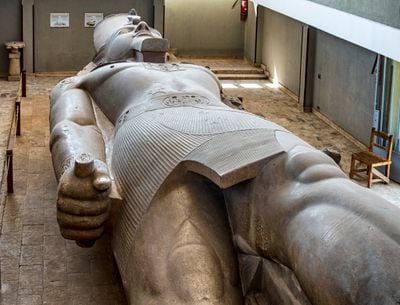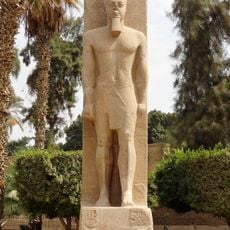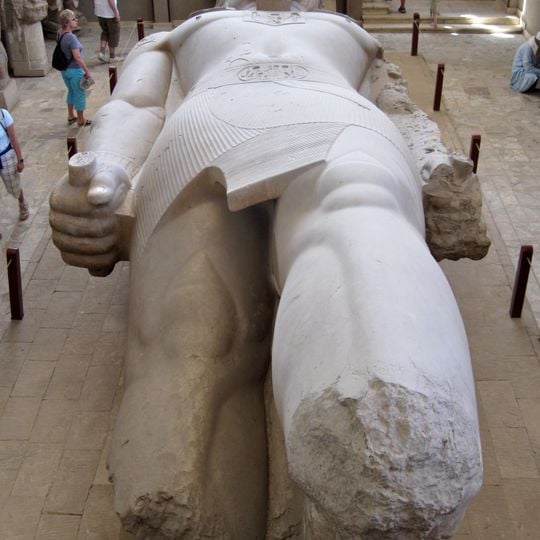
Statue of Ramesses II, Ancient statue in Grand Egyptian Museum, Giza, Egypt.
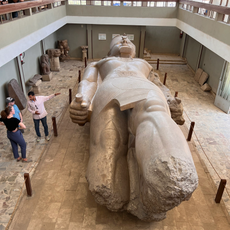
The Statue of Ramesses II is a monumental red granite figure at the Grand Egyptian Museum in Giza, showing the pharaoh in a standing pose and reaching 11 meters (36 feet) in height. Weighing 83 tons, it stands as one of the heaviest sculptures of its kind, with facial and garment details preserved despite its scale.
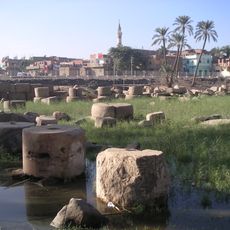
The figure was found broken into six pieces in 1882 at Mit Rahina near Memphis and passed through multiple restoration stages before reaching its current condition. It dates to the 19th Dynasty, when Ramesses II ruled from 1279 to 1213 before the Common Era.
Ramesses II bore the throne name User-Maat-Re, meaning powerful is the truth of Re, reflecting his role as keeper of divine order. His image appears across Egypt more than any other pharaoh, shaping how we picture ancient rulers today.
The museum displays the figure in a dedicated area with raised platforms, letting visitors view it from multiple angles. Lighting changes throughout the day and highlights different surface details as you walk around.
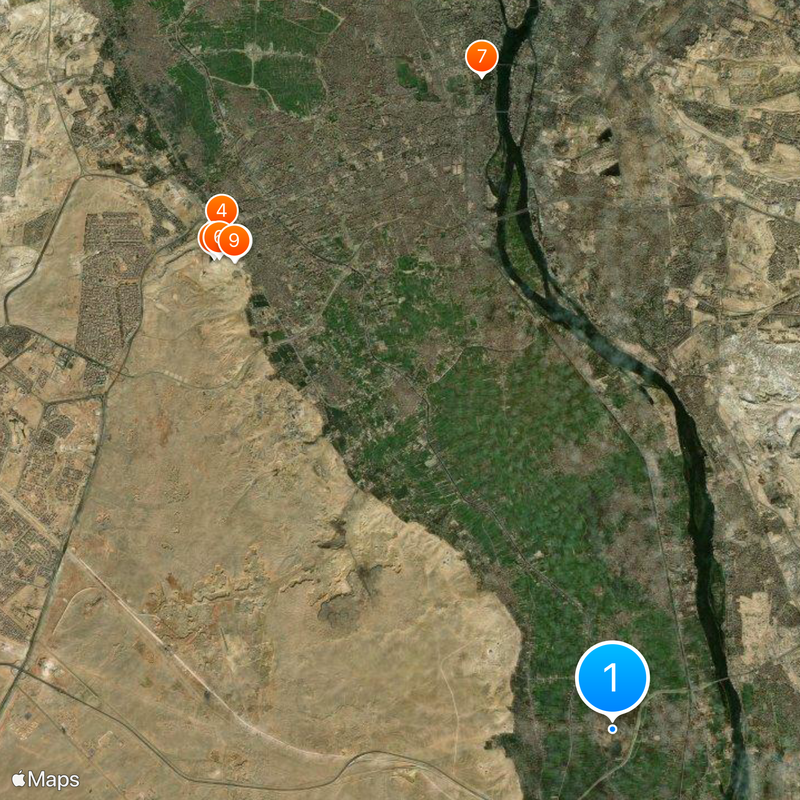
This sculpture traveled through Cairo streets four times over more than 3,200 years, with the final 366-meter (1,200-foot) journey in 2006 completed inside a custom metal cage. Engineers secured the figure with 18 hydraulic axles during transport to avoid vibrations.
The community of curious travelers
AroundUs brings together thousands of curated places, local tips, and hidden gems, enriched daily by 91,695 contributors worldwide.