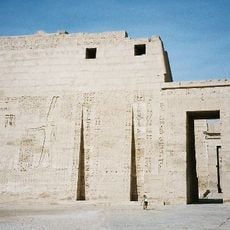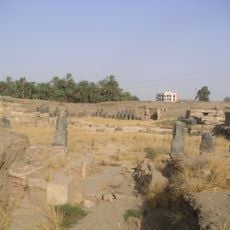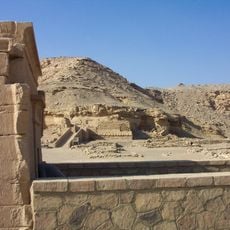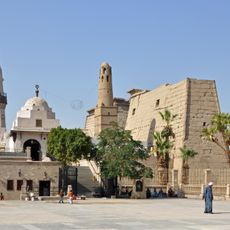
Temple of Khnum, Egyptian temple in Esna, Egypt.
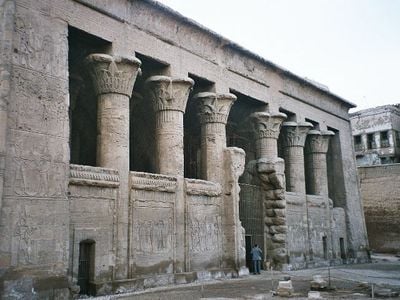
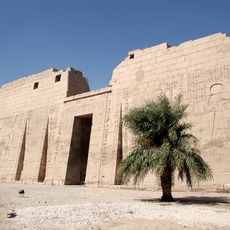
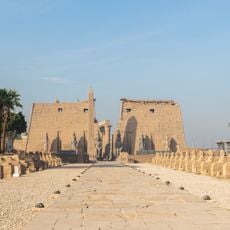
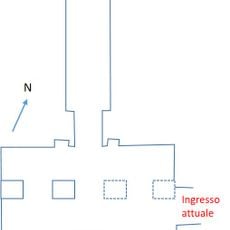
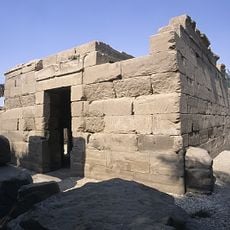
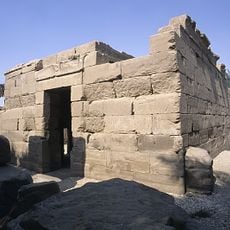
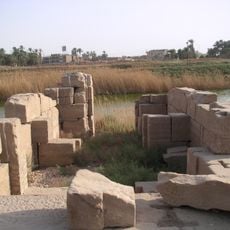
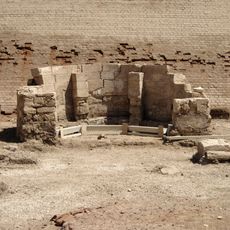
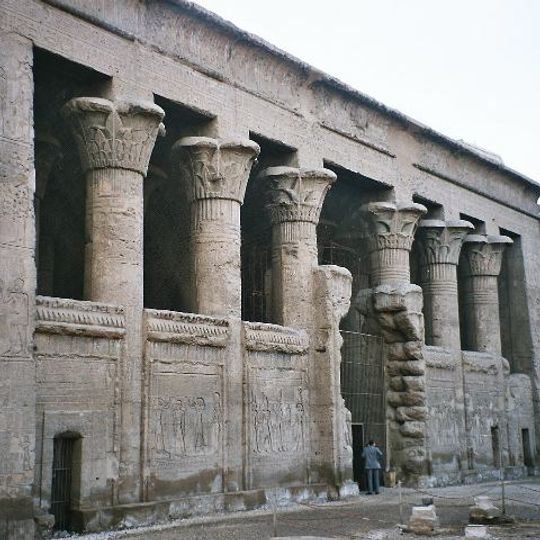
The Temple of Khnum is an Egyptian temple in the center of Esna, a town on the west bank of the Nile in Upper Egypt. The structure sits well below the level of the modern town around it, reached by descending a wide staircase, and features 24 columns arranged in six rows, each topped with a different plant-shaped capital.
Construction began under Ptolemy VI in the 2nd century BCE and continued through the Roman period, with the last dated inscription going back to 250 CE. Several Roman emperors added reliefs and inscriptions, making this one of the latest major temples completed in ancient Egypt.
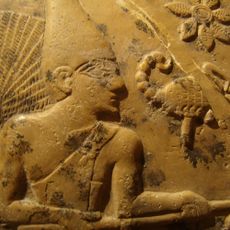
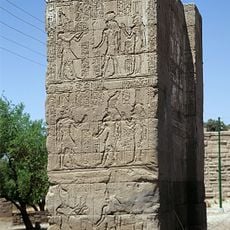
The temple was dedicated to Khnum, a ram-headed god believed to shape humans from clay on a potter's wheel. The reliefs carved along the walls show ritual scenes and festival processions that give a direct sense of how worship was practiced here.
The temple is in the center of town and easy to reach on foot from the main market area. Restoration work is ongoing, so different sections may be open or partially covered depending on when you visit, and it is worth checking conditions before planning your time there.
The ceiling of the hypostyle hall is covered with astronomical texts and zodiac signs that priests used to calculate the timing of religious festivals. Much of this painted decoration was hidden under layers of soot for centuries and has only become visible again through recent cleaning work.
The community of curious travelers
AroundUs brings together thousands of curated places, local tips, and hidden gems, enriched daily by 92,379 contributors worldwide.