Thebes, Ancient capital in Luxor Governorate, Egypt
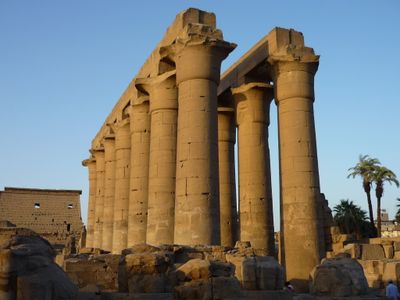
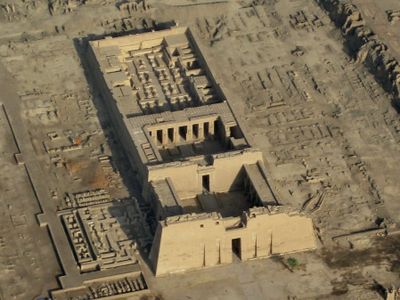
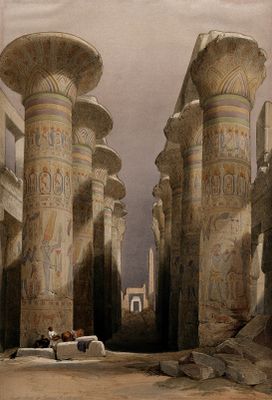
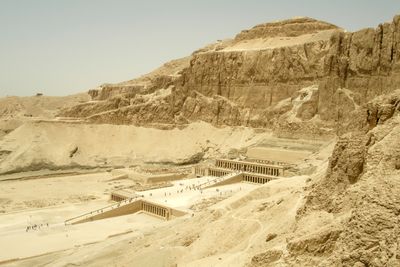
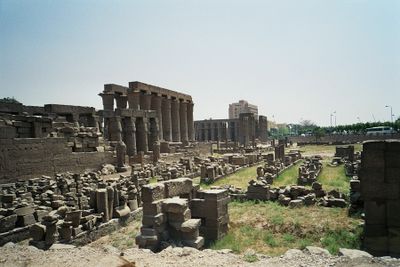
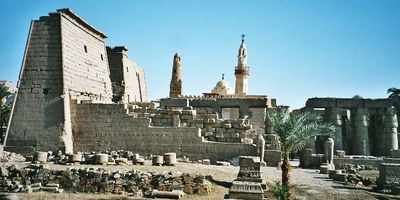
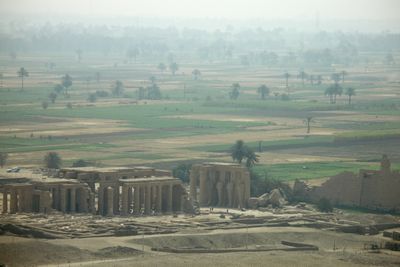
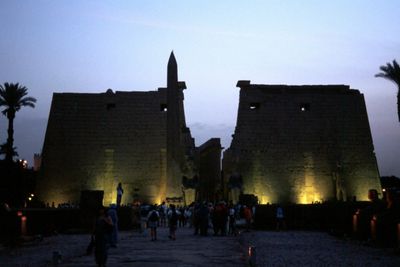
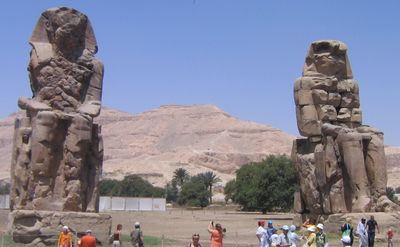
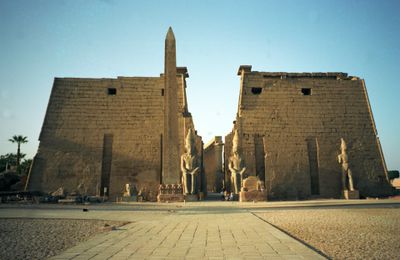
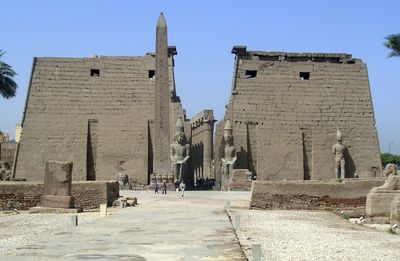
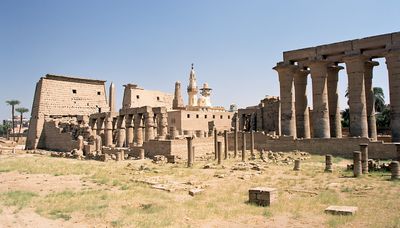
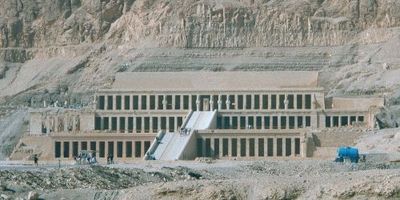
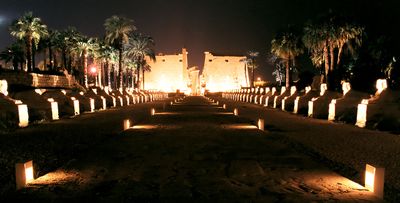
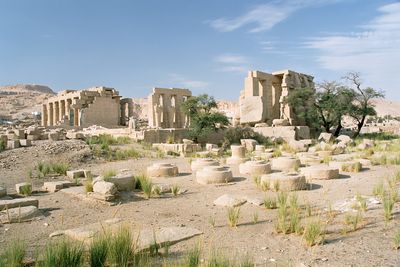
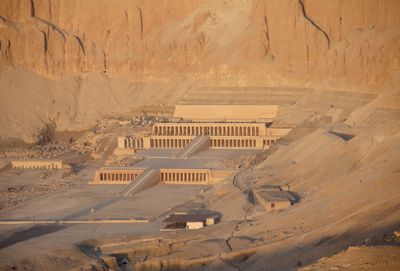
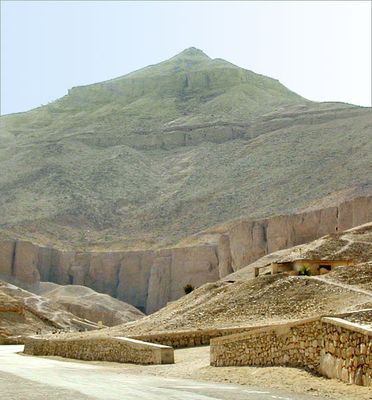
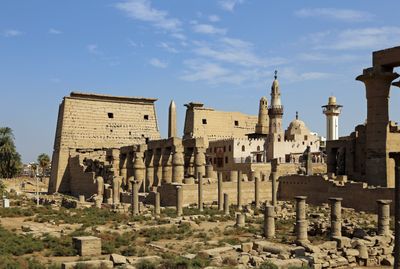
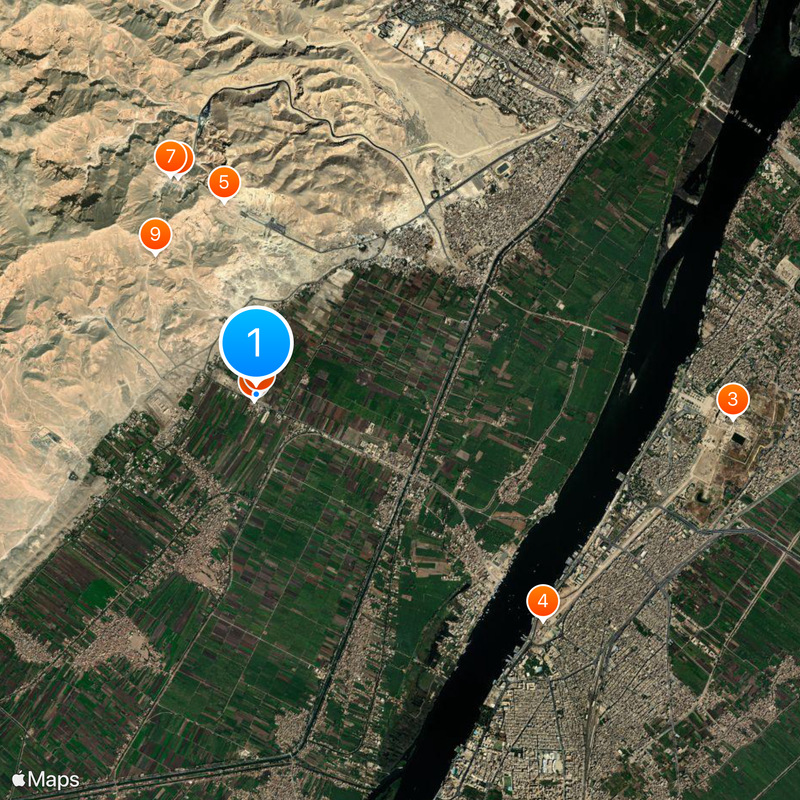
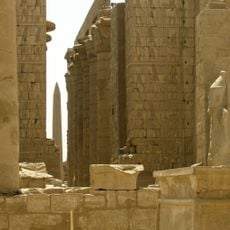
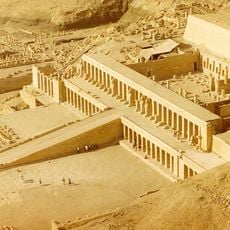
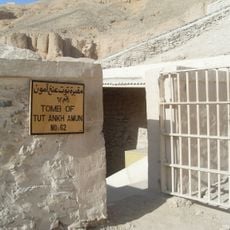
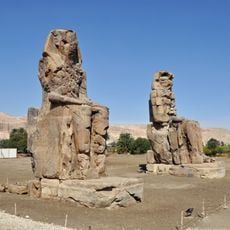
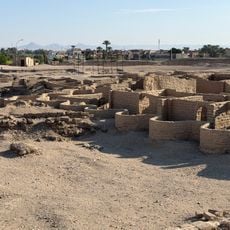
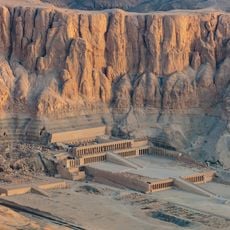
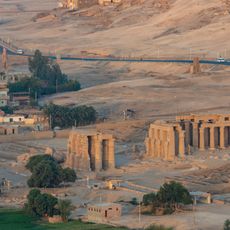
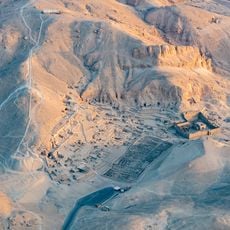
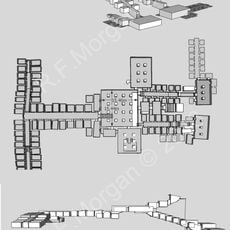
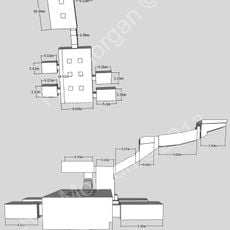
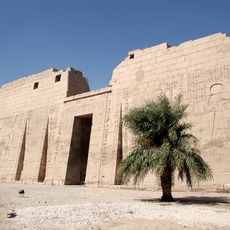
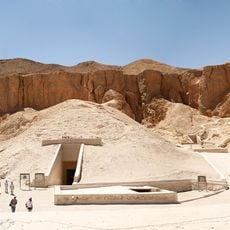
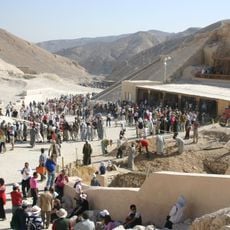
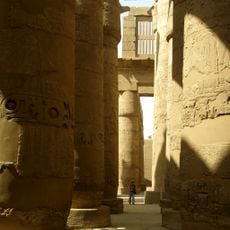
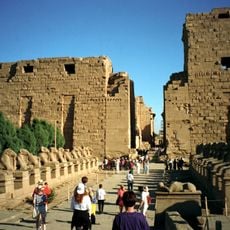
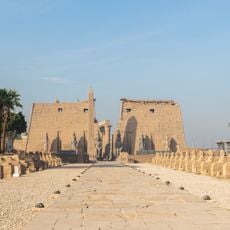
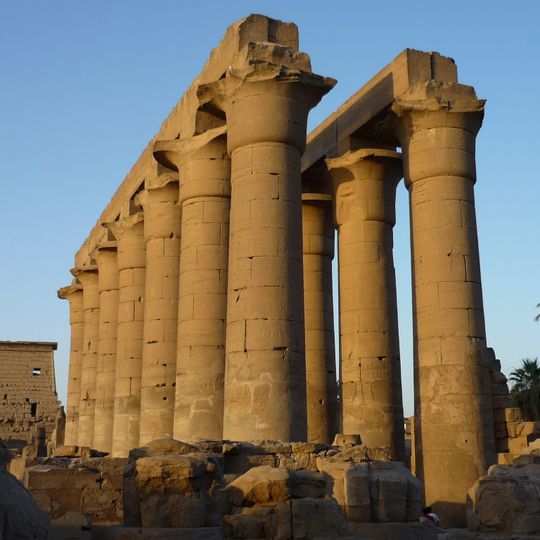
Thebes stretches across both banks of the Nile and includes worship sites, burial grounds, and residential areas from several centuries of pharaonic rule. The eastern side features large columned halls and open courtyards, while the western side holds chambers carved into steep cliffs.
The capital flourished between the 16th and 11th centuries BCE, when successive rulers controlled tributary lands from Nubia to the Euphrates. Each pharaoh expanded existing compounds and added their own structures, until political power later shifted northward.
Ancient Egyptians called the city Waset, "City of the wꜣs", after the pharaohs' long staff with an animal's head and forked base; from the late New Kingdom it was njw.t-jmn, "City of Amun". The Greeks rendered Amun as Zeus Ammon and called it Diospolis, "City of Zeus", or Great Diospolis. More than sixty annual festivals were held, among them the Beautiful Feast of Opet and the Beautiful Festival of the Valley.
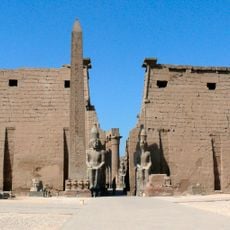
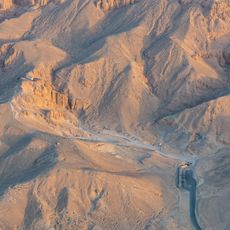
Thebes covers 93 km², with Karnak and Luxor temples on the east bank and the necropolis on the west bank, so plan crossings of the Nile between the two. The west bank also takes in the Theban Hills up to al-Qurn, 420 m high, where paths climb and the ground is uneven.
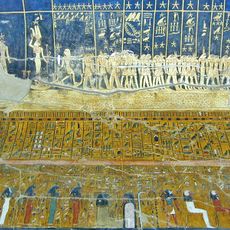
Some tombs contain astronomical ceilings with precise star charts depicting the night sky from over 3,000 years ago. These painted panels helped priests time religious festivals according to seasons and lunar cycles.
The community of curious travelers
AroundUs brings together thousands of curated places, local tips, and hidden gems, enriched daily by 92,247 contributors worldwide.