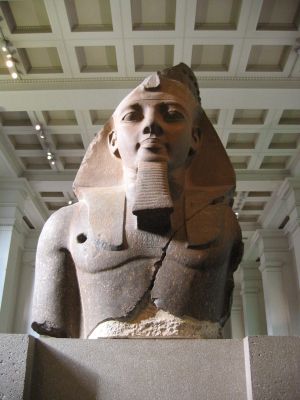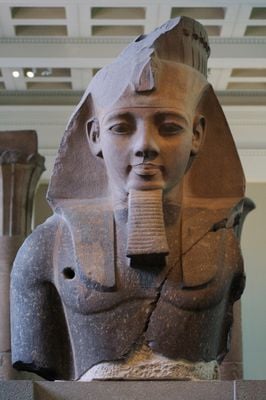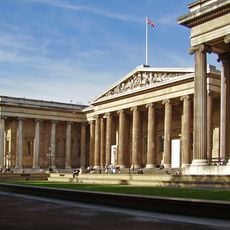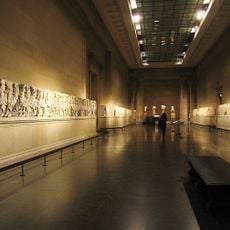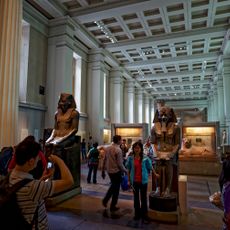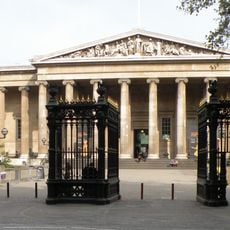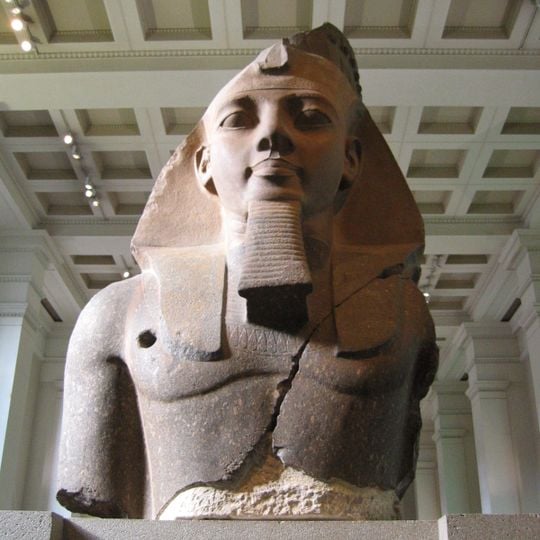
Younger Memnon, Ancient Egyptian granite statue in British Museum, United Kingdom
The statue shows Ramesses II wearing the traditional nemes headdress, a three-part wig form that Egyptian rulers wore. The figure measures 267 centimeters in height and 203 centimeters in width and is carved from dark granite.
Giovanni Belzoni, an Italian explorer, brought the figure from the Ramesseum mortuary temple near Thebes to London in 1818. The sculpture was created during the 19th Dynasty, when Ramesses II commissioned numerous monuments in his honor.
The name refers to the Greek king Memnon, though the figure represents Ramesses II, a mix-up that 19th-century European travelers made. Visitors today notice especially the downward-facing eyes, created through the use of different granite types.
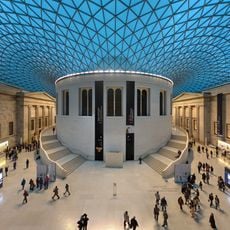
The figure stands permanently in Room 4 of the Egyptian sculpture gallery and carries inventory number EA 19. Visitors can view the work from several angles, as it is placed freely in the space.
The arrival of the sculpture in England prompted Percy Bysshe Shelley to write the poem Ozymandias, which reflects on the impermanence of power. The text was composed in 1817, shortly before the figure reached London, inspired by early reports about the transport.
The community of curious travelers
AroundUs brings together thousands of curated places, local tips, and hidden gems, enriched daily by 90,777 contributors worldwide.