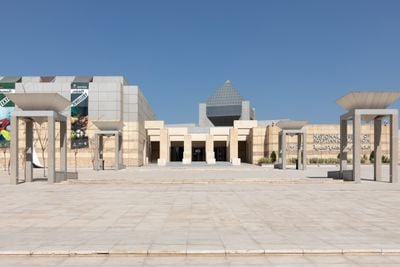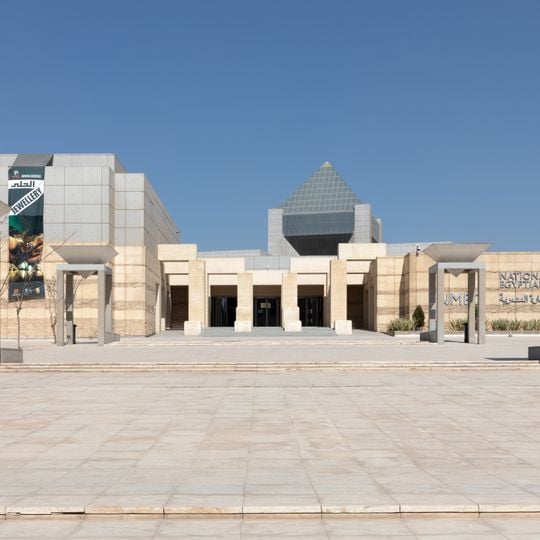
National Museum of Egyptian Civilization, Archaeological museum in Fustat district, Cairo, Egypt
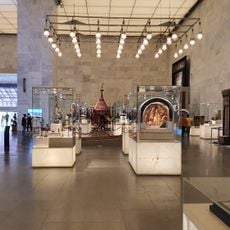
This institution stands in the Fustat district south of the historic center and displays finds from every era of the country's past. Nine halls spread across several floors, each with a separate thematic focus ranging from everyday objects to religious items.
Planning started in the early 1980s with international support, and two decades later construction began. The full opening took place in spring 2021 after individual sections had been opened to visitors step by step.
The name reflects the Arabic term for Old Cairo and a collection reaching back to the earliest settled communities along the river. Visitors today see stone tools, clay vessels and jewelry showing how people shaped their surroundings and used the water thousands of years ago.
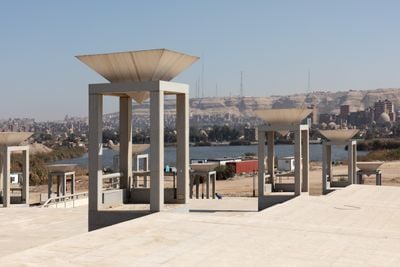
The site lies on the shore of a man-made lake, so comfortable shoes are advisable for longer walks between exhibition rooms. On hot days the air-conditioned interiors provide relief, while outdoor areas are more pleasant to walk through early in the morning or late afternoon.
A dedicated gallery in the lower level houses the mummified remains of rulers, among them Seqenenre Tao and Hatshepsut, kept in special display cases under strict climatic conditions. This room was fitted with its own ventilation to protect the fragile tissue over decades.
Location: Cairo
Inception: 2002
Official opening: April 3, 2021
Address: El Fustat Road, Ein El Sira, Cairo 17611
Phone: +20227412273
Email: info@nmec.gov.eg
Website: https://nmec.gov.eg/ar
GPS coordinates: 30.00750,31.24833
Latest update: December 5, 2025 22:27
Cairo is home to millennia of history. The Giza Pyramids, built between 2686 and 2494 BC, stand alongside Fatimid mosques like the Ibn Tulun Mosque from 879, and Mamluk fortifications such as Saladin's Citadel from the 12th century. Religious heritage reflects community diversity: Saint Serge Church dates to the 4th century, while Sainte-Marie Church from the 7th century reuses elements of the Roman fortress of Babylon. The Cairo Museum, opened in 1902, displays over 120,000 archaeological artifacts including Tutankhamun’s burial mask. Khan Al-Khalili market, established in 1382, continues traditional trade along its alleys lined with spice and craft shops. The Gayer Anderson House exemplifies 16th-century Ottoman residential architecture. These sites span Egypt’s history from pharaonic antiquity to the Ottoman period.
Sayeda Aisha Mosque
2.1 km
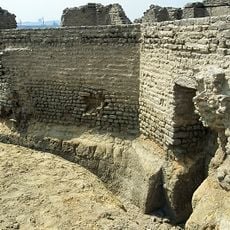
Al-Fustat
1.1 km
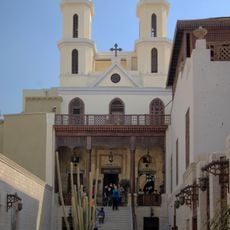
Hanging Church
1.8 km
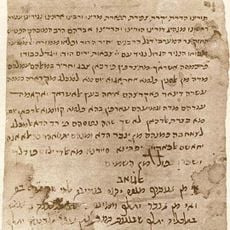
Cairo Geniza
1.7 km
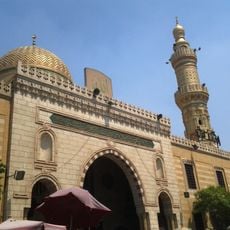
Al-Sayeda Nafeesah Mosque
1.7 km
Coptic Cairo
1.6 km
National Museum of Egyptian Civilisation
120 m
Ben Ezra Synagogue
1.7 km
Coptic Museum
1.7 km
Mausoleum of Imam al-Shafi'i
985 m
Gayer-Anderson Museum
2.3 km
Nilometer in Rhoda Island
2.2 km
Church of St. George
1.7 km
Saints Sergius and Bacchus Church
1.7 km
Mausoleum of Sayyida Ruqayya
2 km
Saint Mercurius Church in Coptic Cairo
1.8 km
Lulua Mosque
2.4 km
Church of Saint Menas
1.6 km
Mausoleum of Shajarat al-Durr
2.1 km
Al-Sultaniyya
2.1 km
Powder magazine of Muhammad Ali
2 km
Qubbas of the seven daughters
842 m
Al-Burdayni Mosque
2.1 km
Mausoleum of the family of Tabataba
668 m
German Cemetery, Cairo
1.7 km
Mausoleum of al-Ashraf Khalil
1.9 km
Mausoleum of Fatima Khatun
1.9 km
Cairo War Memorial Cemetery
1.9 kmReviews
Visited this place? Tap the stars to rate it and share your experience / photos with the community! Try now! You can cancel it anytime.
Discover hidden gems everywhere you go!
From secret cafés to breathtaking viewpoints, skip the crowded tourist spots and find places that match your style. Our app makes it easy with voice search, smart filtering, route optimization, and insider tips from travelers worldwide. Download now for the complete mobile experience.
A unique approach to discovering new places❞
— Le Figaro
All the places worth exploring❞
— France Info
A tailor-made excursion in just a few clicks❞
— 20 Minutes