Tarō, dissolved municipality in Shimohei district, Iwate prefecture, Japan
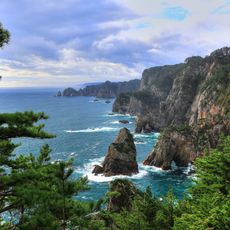
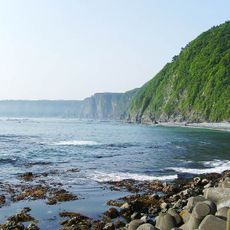
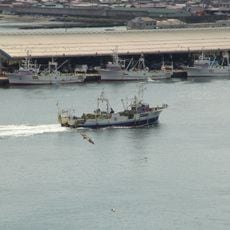
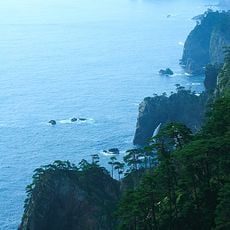
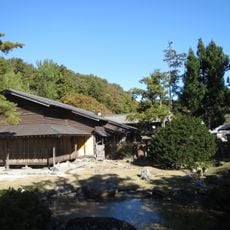
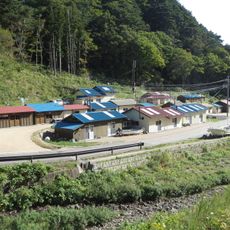
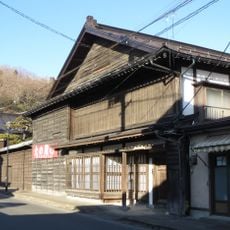
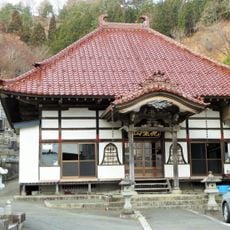
Tarō is a former municipality in Iwate Prefecture in northern Japan, located along the Pacific coast. It consists of simple buildings and houses with traditional roofs, surrounded by hills and a rugged coastline with fishing boats in small harbors.
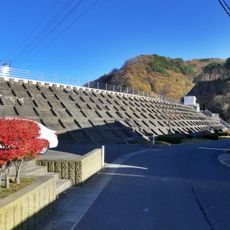
The place was established in the late 1800s and developed as a fishing community. The area was repeatedly struck by tsunamis, particularly in 1896 and 1933, which led to the construction of high protective seawalls that were later overwhelmed by a massive tsunami in 2011.
This place was a fishing community for generations, with residents living by daily routines tied to the sea. Visitors can still observe fishing boats and simple markets where local products are sold, and feel how the connection to the ocean shapes everyday life here.
The place is now part of the city of Miyako and can be explored on local roads with views of the coast. Visitors should note that the terrain is hilly and there are no large tourist facilities, but simple walking paths and harbor areas offer direct insight into daily life.
The place became known for its massive protective seawalls that reached about 10 meters high and were locally nicknamed the 'Great Wall of China'. Despite these defenses, the 2011 tsunami with waves over 15 meters (50 feet) demonstrated the overwhelming power of nature.
The community of curious travelers
AroundUs brings together thousands of curated places, local tips, and hidden gems, enriched daily by 60,000 contributors worldwide.