Kyū sendō-ji ato, Former Buddhist temple in Kunisaki, Japan
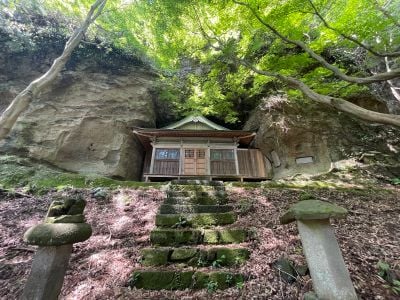
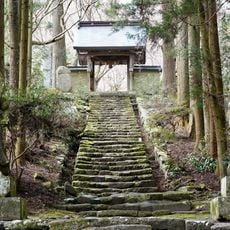
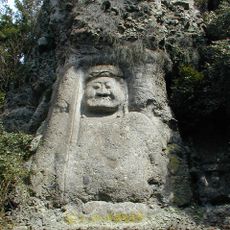
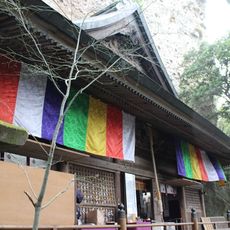
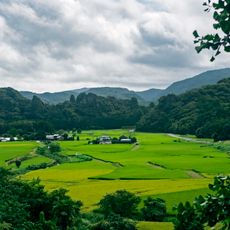
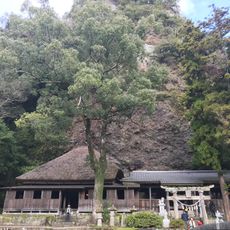
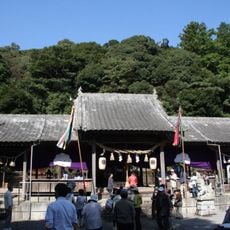
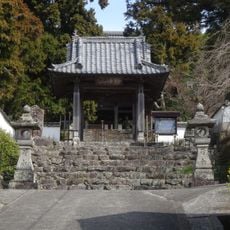
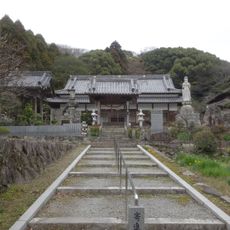
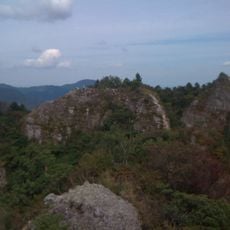
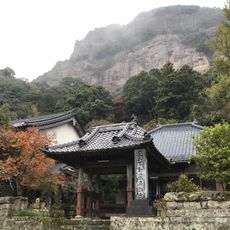
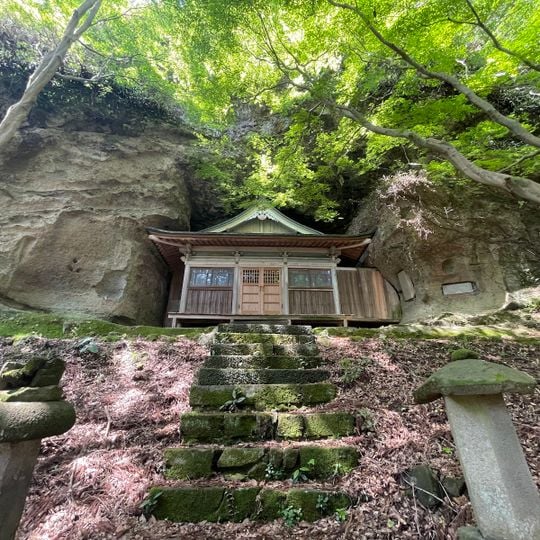
Kyū sendō-ji ato is the ruined temple site of Sendō-ji on the slopes of Mount Sendō and Mount Fudō in Kunisaki, Ōita Prefecture. No halls remain at the main compound: a pair of Niō statues carved in half-relief on a single rock stands at the site of the former gomadō, and stone retaining walls are scattered across the hillside. About 500 m above, the inner sanctuary (oku-no-in) is built into a rock face and houses a Thousand-Armed Kannon.
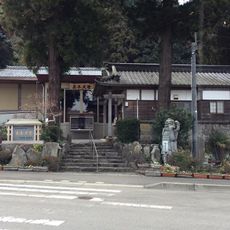
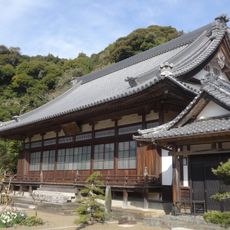
Tradition holds that the monk Nimmon founded Sendō-ji in 718, the first of the Rokugō Manzan temples, and it grew into their central headquarters with 16 branch temples, called the "Kōya of the West". Its large halls were burned by Ōtomo Sōrin during the Tenshō era and rebuilt in the Bunroku era without recovering their former scale. The remaining monks' quarters moved down to the foot of the mountain in the early Shōwa period, where today's Sendō-ji stands.
The temple name comes from a legend: while the monk Ninmon trained at the nearby Gotsuji Iwaya, a dragon king of the northeastern sea offered a thousand lights in recognition of his virtue. At the site of the main hall, the Goma-dō, a pair of Niō guardians carved in half-relief from a single rock still stands among the stone walls.
The site is best explored on foot and during warmer months when the paths are dry and vegetation is visible. Wear comfortable shoes as the ground is uneven and some sections climb steeply.
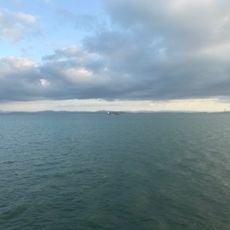
At the east side of the site, the East Fudō hermitage (Higashi Fudō) sits half fitted into a rock cave and half jutting from a cliff; reaching it means climbing a narrow rock face using chains. From there the island of Himeshima can be seen in the distance.
The community of curious travelers
AroundUs brings together thousands of curated places, local tips, and hidden gems, enriched daily by 93,850 contributors worldwide.