Port of Habu, Port in Oshima, Tokyo, Japan
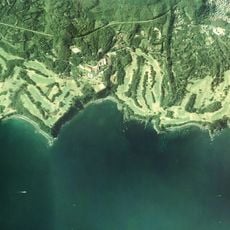
Port of Habu is a natural harbor on the southwestern side of Oshima, sheltered by steep cliffs that form a near-circular bay. The protected water inside makes it one of the most reliable anchorages along the Izu Islands chain.
The harbor was shaped by the 1703 Genroku earthquake, which broke open a volcanic lake and connected it to the sea. The tsunami that followed deepened and widened the opening, giving the bay its current form.
Habu's name became widely known through the 1920s song "Habu no Minato", written by Noguchi Ujo with music by Nakayama Shinpei, which was a major hit. The lyricist Miyakawa Tetsuo, winner of the Japan Record Award for "Kiri", came from the Habu port area, as did the folklorist Sakaguchi Kazuo and the painter Nakade Nachiko. From Meiji through Showa, writers and artists stayed here and left works about the port.
Ferries connect the port to Tokyo, and crossing times vary depending on the type of service and conditions at sea. It is worth checking schedules ahead of time, as wind and rough weather can affect departures, especially in winter.
The harbour began as a crater lake formed by a 9th-century fissure eruption. The 1703 Genroku tsunami connected it to the sea, and in 1800 Akihiro Heiroku cut back the cliff to widen the entrance into its present shape. A stone monument marking the port's centenary was erected in July 1901.
The community of curious travelers
AroundUs brings together thousands of curated places, local tips, and hidden gems, enriched daily by 95,031 contributors worldwide.