Ushibuse River French-style Stepped Dam, Water control dam in Matsumoto, Japan.
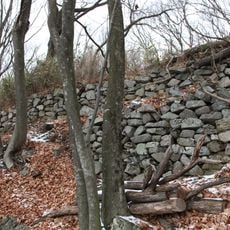
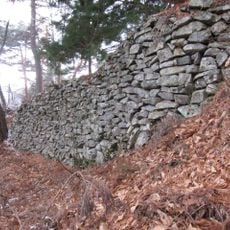
The Ushibuse River French-style Stepped Dam is a tiered stone dam on the Ushibuse River in Matsumoto, Japan, recognized as an Important Cultural Property. The structure is made up of several stone steps set across the river, along with stone groundsills and reinforced banks on either side.
Sabō works on the Ushibuse River ran from 1885 to 1918, led by Ikeda Maruo, an engineer of the Home Ministry's civil engineering department who had studied in Europe. For the steepest final stretch he adapted the stepped-channel method of the Sagnières valley on the Durance in Provence, France, completing the 141-metre stone channel with 19 drops at Kitanaida, Kataoka village, Higashichikuma district, Nagano. It was registered as a Tangible Cultural Property in 2002 and designated an Important Cultural Property in 2012.
The name "French-style stepped works" comes from the Durance and Sagnières valley model in Provence that the engineer Ikeda Maruo adapted here. The 141-metre stone channel with its 19 drops is now a registered Important Cultural Property, and the surrounding area has been fitted with campsites and walking paths.
The dam is accessible throughout the year and can be seen clearly from paths along the riverbank. A short walk along the water is enough to take in the full shape of the stone steps from different angles.
Although this type of stepped dam was developed in France, the one on the Ushibuse is considered one of the earliest examples of this construction method in Japan. The stone steps are not mortared together but carefully stacked, which speaks to the durability of the design over decades.
The community of curious travelers
AroundUs brings together thousands of curated places, local tips, and hidden gems, enriched daily by 93,743 contributors worldwide.