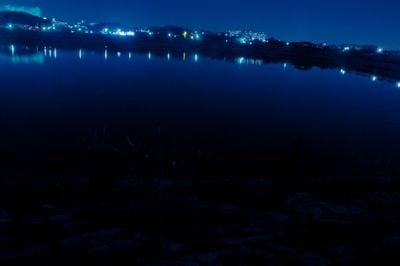
Sayama Pond, Irrigation reservoir in Ōsakasayama, Japan.
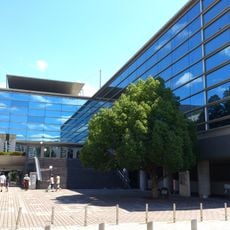
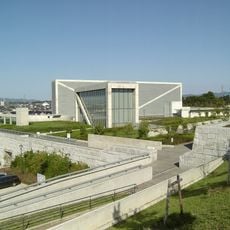
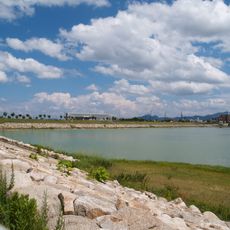
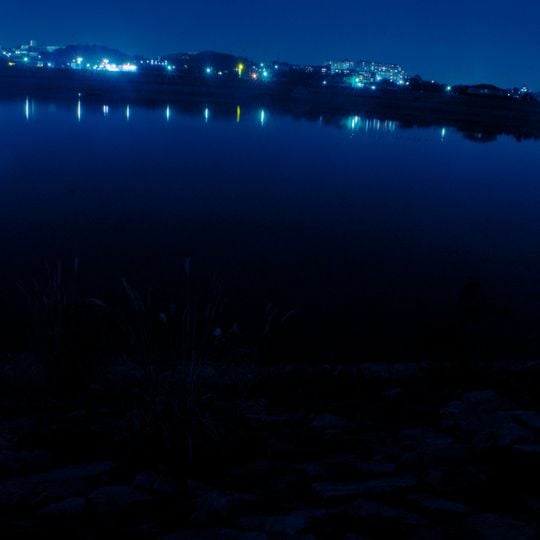
Sayama Pond is an irrigation reservoir in Ōsakasayama, formed by an earthen dam at the confluence of the Nishiyoke and Mitsuya rivers. Its embankment now carries a 2,850-metre loop path, with a paved walkway, metal railing and stone edging along the water. The Ōsaka Prefectural Sayamaike Museum stands at the pond's north side.
Built in the Asuka period where the Nishiyoke and Mitsuya rivers meet, the pond has no confirmed construction year; estimates range from the 4th to the 7th century. The Kojiki and Nihon Shoki both name it. In 731 the monk Gyōki repaired it, in 762 the court rebuilt the collapsed dike with 83,000 workers, and in 1202 the monk Chōgen directed another repair, recorded on a stone monument that survives.
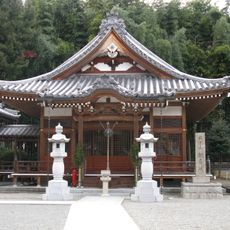
The pond gives its name to the surrounding area of Ōsakasayama and to the Sayamaike Museum on its north bank. A small shrine, Sayamaike Jinja (Ryū Jinja), stands in the water. The reservoir has long been known for cherry blossoms: about 1,300 trees, including the early-flowering Koshino-higan, line the banks and the museum grounds, drawing crowds in late March.
The site is best explored on foot to view the dam and surrounding landscape. A nearby museum displays archaeological finds from different construction periods and offers context for what you see.
The stone coffins found at Sayama Pond are not burials: seven stone coffin lids were reused in the stone outlet of the pond's middle conduit, and they are now kept at the Osaka Prefectural Sayamaike Museum. The wooden pipes tell another story: tree-ring dating of timber from the east conduit gave a felling year of 616, the oldest firm date at the site.
The community of curious travelers
AroundUs brings together thousands of curated places, local tips, and hidden gems, enriched daily by 93,592 contributors worldwide.