Ōzuka Kofun, Decorated kofun in Keisen, Fukuoka Prefecture, Japan
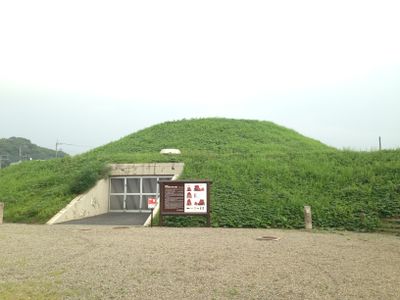
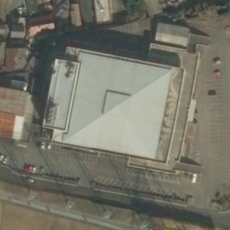
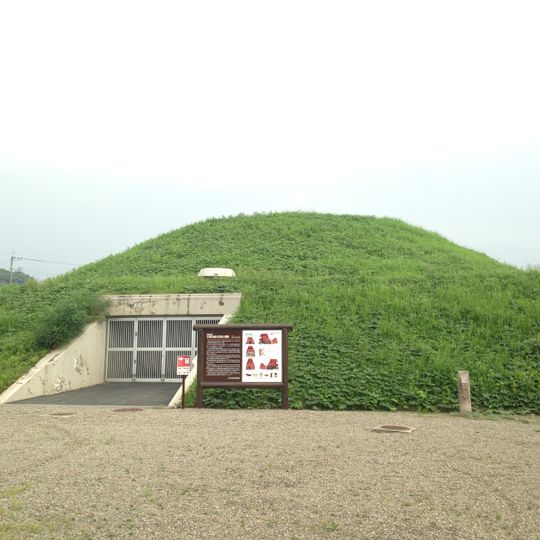
Ōzuka Kofun is a keyhole-shaped mound in Keisen, Fukuoka Prefecture, with a round rear section about 56 m across and 9.5 m high and a rectangular front section about 60 m wide; over half the mound was removed by quarrying. A single stone chamber with a burial platform, stone shelf and small window opens into the mound, whose slope carries a small white-topped structure above a gated concrete entrance.
The mound was built in the mid-6th century. On 30 September 1934, soil extraction for the nearby Uchida coal mine cut into the front section and opened a corner of the antechamber wall, revealing the tomb by chance. It was designated a national Historic Site on 15 June 1937 and, on 29 March 1952, became Japan's first decorated kofun raised to Special Historic Site.
The paintings cover nearly every surface of the stone chamber except the side walls of the antechamber. Five colours are used, the most of any decorated kofun in Japan: red horses with tiny riders flank the entrance, while quivers, shields, swords and bows appear on the walls. Fern-scroll and double-wheel patterns fill the burial platform.
The stone chamber is sealed and normally closed; it opens to the public twice a year, in spring and autumn. The site is about a six-minute walk (480 m) from JR Keisen Station on the Chikuhō Main Line. The adjacent Ōzuka Decorated Kofun Museum, opened in 1994, presents the tomb and its paintings.
The rear chamber holds a stone coffin covered by a stone house-shaped enclosure, with two hollows for heads cut into the coffin floor and two more stone pillows placed outside it, suggesting four burials. A stone shelf sits above the rear wall and a lamp stand stands before the coffin.
The community of curious travelers
AroundUs brings together thousands of curated places, local tips, and hidden gems, enriched daily by 93,420 contributors worldwide.