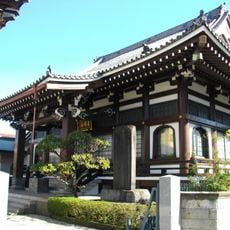
Hakusan-jinja, Shinto shrine in Kimitsu, Chiba Prefecture, Japan
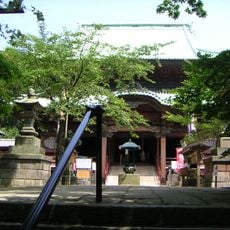
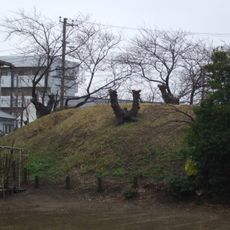
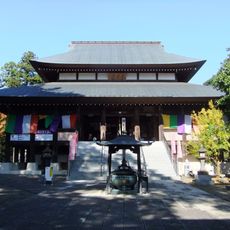
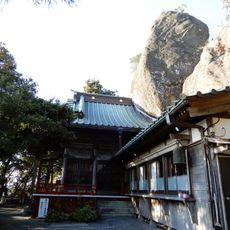
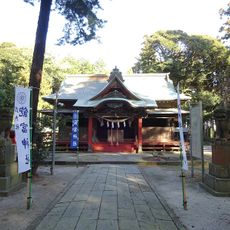
Hakusan-jinja is a Shinto shrine in the Tabata district of Kimitsu, Chiba Prefecture, formerly ranked as a gōsha. Behind its worship hall lies the Hakusan-jinja Kofun, a keyhole-shaped burial mound 89 metres long, with a 52-metre rear circle and a 38-metre front section, designated a Chiba Prefecture historic site in 1981.
According to shrine tradition, Prince Ōtomo (Emperor Kōbun), defeated in the Jinshin War of 672, fled east and took his own life here. In 684 an imperial envoy built the hall and the deity was called Tahara-no-kami. In 884 the kami was raised from junior fifth rank, upper grade, to junior fifth rank, lower grade, and the shrine became a village shrine in 1873.
The shrine was long called Tahara-jinja, and a framed plaque with that name, brushed in 1829 by the priest-prince Masayoshi, hangs in the worship hall. The name changed to Hakusan-jinja after the Meiji Restoration, when it was ranked a gōsha in 1873. It enshrines Ōtomo no Ōji and Kikuri-hime.
The shrine stands in Tabata, Kimitsu, a 15-minute walk from JR Tabata Station on the Kururi Line. The precinct and the kofun behind the hall are on a tongue-shaped hill spur above the east bank of the Obitsu River; the mound's rear circle rises about 10 m, so expect uneven ground.
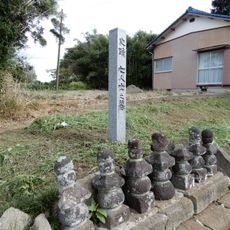
Behind the shrine hall stands the Hakusan-jinja Kofun, a keyhole-shaped tomb 89 m long, with a 52 m round rear mound and a 38 m front section. It is dated to the late 4th century and was designated a Chiba Prefecture historic site in 1981. In 1898 Yagi Sozaburo's team dug into a round mound nearby and found a beast-shaped mirror and a sword.
The community of curious travelers
AroundUs brings together thousands of curated places, local tips, and hidden gems, enriched daily by 93,657 contributors worldwide.