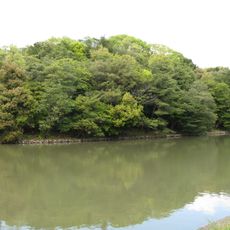
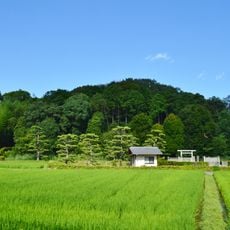
Ishinokarato Kofun, Burial mound in Kizugawa and Nara, Japan
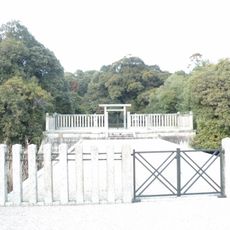
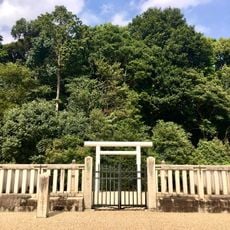
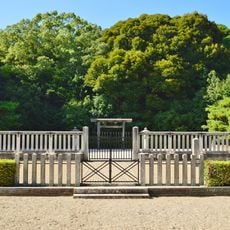
Ishinokarato Kofun is a two-tiered burial mound: a circular upper tier about 9.2 meters across and 1.6 meters high set on a square lower tier roughly 13.8 meters per side and 1.2 meters high, built of rammed earth. River stones (fukiishi) remain on the lower slope, while the upper tier has lost most of its stone cover. A horizontal-entry stone chamber of 16 tuff blocks opens to the south.
This burial mound was built in the early 8th century as one of the final kofun constructed in the northern outskirts of the Heijo capital. Excavations uncovered fragments of lacquered coffins along with gold and silver beads inside the stone chamber.
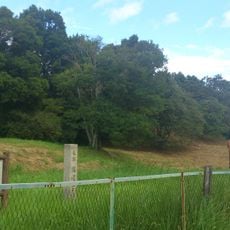
The name Karato comes from the stone chamber's resemblance to a karato, a chest-like container. On the Kyoto side the mound is called Kazahahi Kofun. A 1724 map records a land dispute between Chōshōji village in Yamato and Sōraku District in Yamashiro; Chōshōji won, which is why the mound straddles the Nara–Kyoto border.
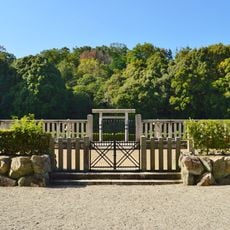
The mound straddles the boundary of Kizugawa, Kyoto Prefecture, and Nara, and is a roughly 20-minute walk from Takanohara Station on the Kintetsu Kyoto Line. It has been restored and laid out as a park, with a low wooden fence and bushes in front of the mound. The stone chamber opens to the south.
The mound straddles the prefectural border: the Kyoto side calls it Kazahahi Kofun. A 1724 map records a land dispute between Chōshōji village in Yamato and Sōraku District in Yamashita; Chōshōji won, and its territory pushed a tongue into Sōraku, which is why the tomb lies in both Nara and Kyoto.
The community of curious travelers
AroundUs brings together thousands of curated places, local tips, and hidden gems, enriched daily by 94,257 contributors worldwide.