Okitsushima-jinja, Shinto shrine in Japan
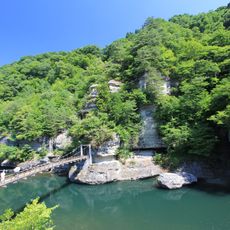
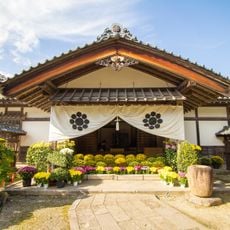
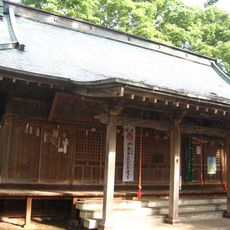
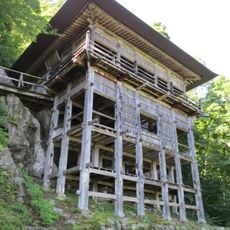
Okitsushima-jinja is a Shinto shrine in the Fubara area of Konan-machi, Kōriyama, Fukushima Prefecture, along the Hatori-Fubara prefectural road. It is a candidate site for the Engishiki-listed shrine of Mutsu Province and its grounds are covered by about 15 hectares of old-growth forest, designated a Fukushima Prefecture Natural Monument in 1964. Within the precinct are the Eboshi-iwa rock, the Fuketsu-dō hall for a snake deity, and the Suga Falls, used for ritual purification.
According to shrine tradition, the shrine was founded in the Heian period when the three Munakata goddesses were ceremonially transferred from Munakata Taisha in Usa, Buzen Province (present-day Fukuoka Prefecture). It is identified as the Okitsushima-jinja listed in the Engishiki's register of deities for Anazawa District, Mutsu Province, and held the rank of gōsha under the prewar shrine system.
Locals sometimes call Okitsushima-jinja "Osugi-sama," and three goddesses - Princess Tagori, Princess Tagitsu, and Princess Ichikishima - are worshipped here. Visitors bring small offerings and bow respectfully to express personal wishes for health, safety, and good fortune.
Access is via Fukushima Prefectural Route 235 (Hatori-Fukura line), which is closed in winter, usually from mid-December to mid-April; during that period the shrine cannot be visited. No local bus service runs nearby, so arrival is by private vehicle or on foot. The shrine forest covers about 15 hectares.
The shrine's 15-hectare grounds are a primeval forest designated a Fukushima Prefecture Natural Monument on 24 March 1964 and listed among the "Fukushima Green Hundred Views". Within it stand the Eboshi-iwa rock, the sacred object of worship, and the Kazaana-dō hall, a subsidiary shrine to a snake deity.
The community of curious travelers
AroundUs brings together thousands of curated places, local tips, and hidden gems, enriched daily by 94,834 contributors worldwide.