Rai San'yō Historic Site Museum, Biographical museum in Fukuromachi, Hiroshima, Japan.
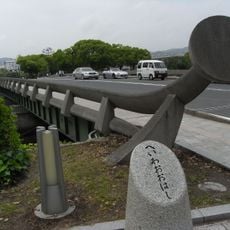
The Rai San'yō Historic Site Museum stands in Fukuromachi, Hiroshima, on the former Rai family estate. Its main exhibit is the Rai San'yō Kyoshitsu, a small detached room where he was confined from 1800, rebuilt in 1958 after the atomic bombing. A single-storey reinforced-concrete exhibition hall, a tea room and a garden surround it; the gate, stone paving, part of the wall and a monument made from the old building's handrail are A-bomb remains.
The Rai family moved to this samurai plot, then called Suginoki-kōji, in 1789. In 1800 Rai San'yō was brought back after attempting to leave the domain and was disinherited and confined here for three years, during which he wrote Nihon Gaishi. The house opened as the Sanyō Memorial Museum in 1935, was rebuilt and reopened under its present name in 1995.
The Rai San'yō Chamber, a National Historic Site, is the small detached room where the Rai family confined San'yō from 1800 to 1803 after his attempted flight from the domain. Here he wrote much of Nihon Gaishi. The present structure is a 1958 reconstruction, the original having burned in the 1945 atomic bombing.
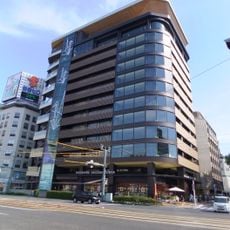
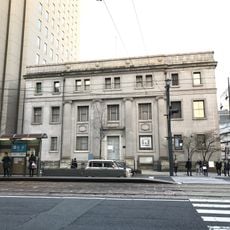
The museum stands next to the former Bank of Japan Hiroshima Branch, about 400 metres from the hypocenter, and is reached on foot in three minutes from Fukuromachi tram stop on the Ujina line, or from Fukuromachi bus stop. The site covers roughly 1,700 square metres, with the exhibition room, tea room and garden laid out on a single floor. The main gate and stone pillars, repaired in 1994, still show bomb damage.
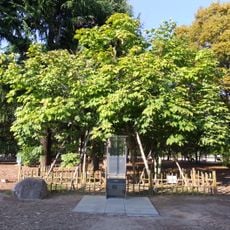
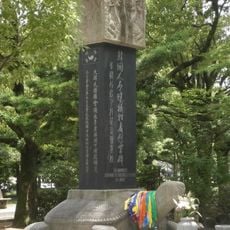
The garden's Kurogane holly was reduced to a charred stump by the 6 August 1945 atomic bombing, about 400 metres from the hypocentre; new shoots appeared from it in 1950. The terracotta monument beside it reuses a handrail from the pre-war museum building, another surviving fragment.
The community of curious travelers
AroundUs brings together thousands of curated places, local tips, and hidden gems, enriched daily by 94,046 contributors worldwide.