Mount Ryozen, Buddhist mountain and national historic site in Fukushima Prefecture, Japan
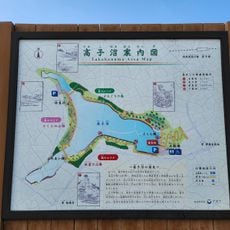
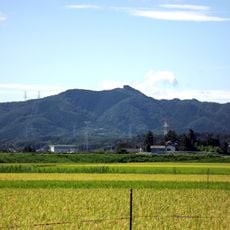
Mount Ryōzen is an 825-metre basalt lava plateau in the Abukuma Highlands, on the border of Date and Sōma in Fukushima Prefecture. Its slopes are a jumble of named boulders and crags, including the cliff-top viewpoint Hōjudai, the ladder-assisted Kokushisawa, and the flat Tengu no Sumō Jō. Traces of esoteric Buddhist practice, notably the rock-cut Gomadan, lie along the trail.
The mountain was home to Ryozen Temple, founded in 859 by Buddhist monk Ennin of the Tendai sect. The temple served as an important religious center until its destruction during the Nanboku-cho period.
The name Ryōzen comes from Mount Ryojusen (Gridhakuta) in India, where Shakyamuni practiced, and was given by Ennin. The mountain was a center of Shugendō mountain religion, and traces of esoteric Buddhist prayer remain among the rocks. The flat rock Tengu no Sumo Jō, said to be where tengu wrestle, is one such spot.
The mountain can be accessed via the Nakamura Highway or Central Tohoku Expressway, with parking available at the trailhead and summit areas. Visitors should prepare for changing mountain weather and varying difficulty levels on different trails.
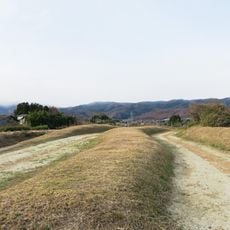
The castle site was excavated in 1980, yielding Seto ware pottery and coins from Song dynasty China. The designation as a National Historic Site, however, dates from 1934, the same year the mountain was named a Place of Scenic Beauty. The finds point to trade links reaching as far as China.
The community of curious travelers
AroundUs brings together thousands of curated places, local tips, and hidden gems, enriched daily by 94,767 contributors worldwide.