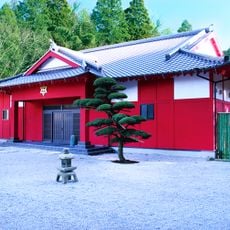
Hankō-ji, Buddhist temple in Sosa, Japan
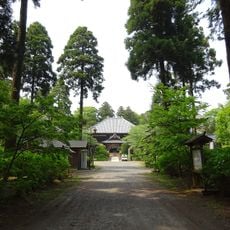
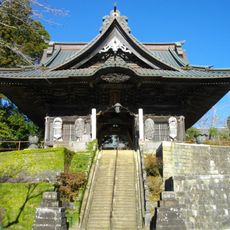
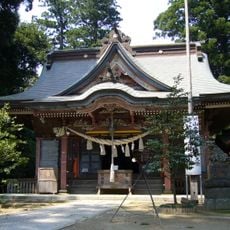
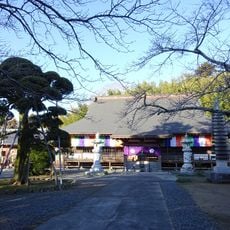
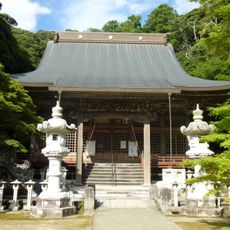
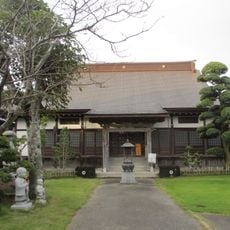
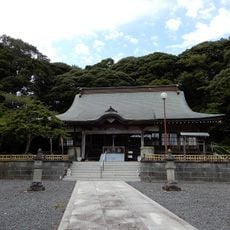
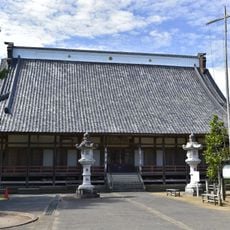
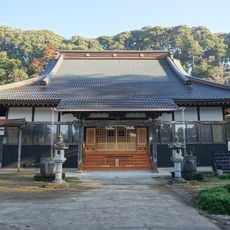
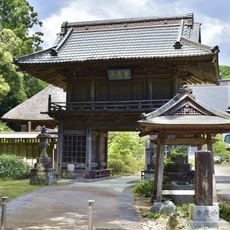
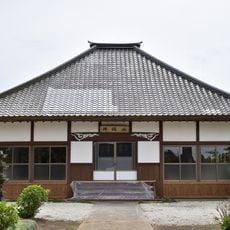
Hankō-ji is a Nichiren Buddhist temple in Sosa, Chiba Prefecture, founded in 1596 as the Iidaka Danrin, a major seminary of the Nichiren school. Its precinct includes a 1651 lecture hall (kōdō) measuring 26.7 m by 18.2 m with a thatched irimoya roof, a bell tower built before 1654, a drum tower from 1720, and a 1680 main gate. The lecture hall, bell tower, drum tower, and main gate are designated Important Cultural Properties, and the whole seminary site is a prefectural historic site.
The temple's forerunner was a study hall opened by Nisshō in 1573 at Kōfuku-ji in Iizuka. In 1596 Nisshō's successor Nisson founded the Iidaka danrin at this site, which became the leading Nichiren school seminary in the Kantō region. It operated for 294 years until the 1872 education reforms closed it; its name was carried on by Risshō University, whose founding monument stands in the grounds.
The temple's name comes from the Iidaka danrin, the first Nichiren school seminary in the Kantō region, founded in 1596. Its name was carried on by Risshō University, and a monument in the grounds marks the university's birthplace. In autumn, the lecture hall hosts the Iidaka Danrin Concert.
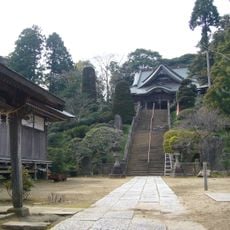
The temple grounds are about 8 km north of central Sosa on a plateau. The main hall, bell tower, drum tower and main gate are National Important Cultural Properties; the whole precinct is a prefectural historic site. The lecture hall was repaired over six years and completed in 2002. In autumn, concerts are held on the lecture hall stage.
The temple grounds hold a 520-plant peony garden behind the lecture hall, planted in recent years and now a local draw. In autumn the lecture hall itself becomes the stage for the Iidaka Danrin Concert. The temple also keeps the Kōmon-zakura, a cherry tree linked by temple records to Tokugawa Mitsukuni's order to plant roadside trees toward the danrin.
The community of curious travelers
AroundUs brings together thousands of curated places, local tips, and hidden gems, enriched daily by 93,630 contributors worldwide.