Shrine of Bahauddin Zakariya, tomb in Multan, Pakistan
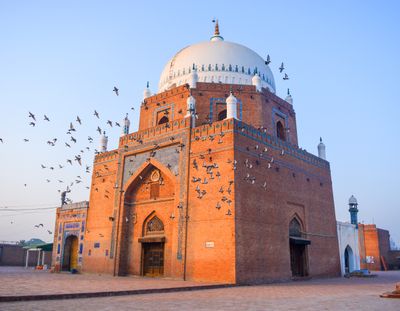
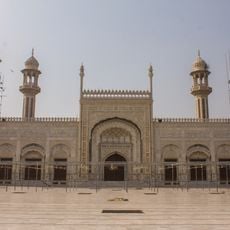
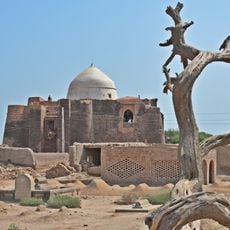
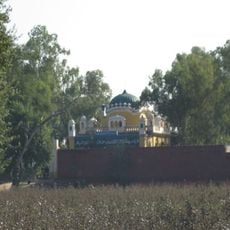
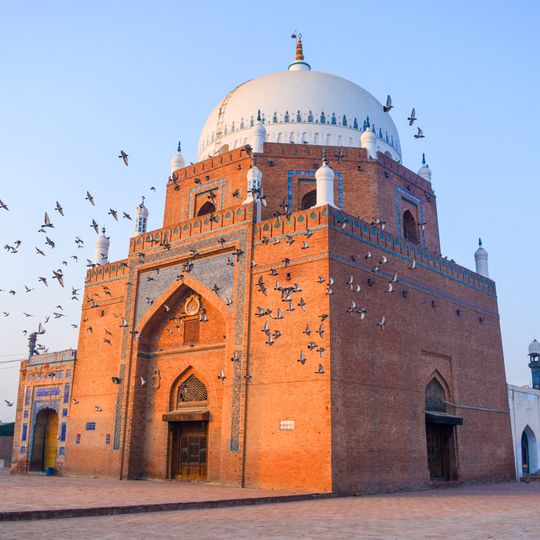
The shrine of Bahauddin Zakariya is a worship site and tomb in Multan, Pakistan, featuring a white hemispherical dome set on an octagonal drum. The brick walls are decorated with blue glazed tiles, connected to a rectangular courtyard surrounded by fortified walls with large wooden doors at the entrance.
The shrine was built in 1262 shortly after the saint's death, and its design became a model for other shrines throughout the region. It sustained damage during an 1848 siege when British forces shelled Multan, but was later restored by the Department of Archaeology while preserving its original form.
The site honors a Sufi saint whose spiritual teachings took root in this city. Visitors notice threads tied to walls and plants by followers as signs of prayer, and hear Qawwali music performed at night, a form of singing that draws people into deep spiritual connection.
The shrine sits in the northeast corner of Multan fort and is accessible to visitors who can walk through the grounds. Early morning visits offer a quieter experience, and guests should dress respectfully and observe appropriate conduct on the premises.
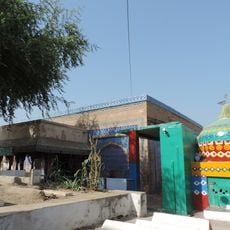
The site displays one of the earliest uses of blue tiles on the Indian subcontinent, a decoration style possibly derived from Khorasan or Central Asia before the Mongol invasions affected that region. A wooden verandah added in 1952 features a brightly painted ceiling and creates a modern entrance to the inner tomb chamber.
The community of curious travelers
AroundUs brings together thousands of curated places, local tips, and hidden gems, enriched daily by 91,805 contributors worldwide.