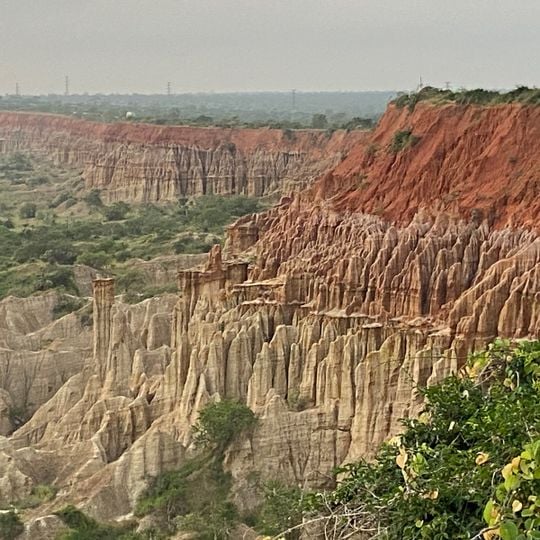
Miradouro da Lua, Cliffs in Luanda Province, Angola
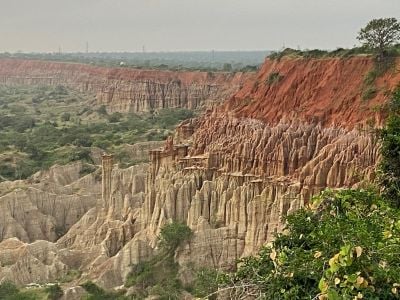
Miradouro da Lua comprises three-colored karst formations with sharp pinnacles and deep gullies along the coastal region south of Luanda. The rocks display layers of red, white, and gray tones created by different mineral compositions.
Millennia of wind and rain erosion carved these cliffs into their present form, establishing them as a natural landmark of Angola. The karst landscape developed through the dissolution of limestone and other soluble rocks by water.
Local residents named this formation Miradouro da Lua, meaning Moon Viewpoint in Portuguese, because the rocky landscape resembles lunar terrain. The name reflects how people see and feel about this place.
This location sits approximately 40 kilometers south of Luanda and is accessible via Highway 100, with a parking area on the right side. Best visited in the late afternoon when the sun is lower and the rock formations show their most vivid colors.
The rock formations display different color intensities during sunset, with the stone turning deep red against the coastal backdrop. This color shift happens because light breaks differently through the layers of various minerals present.
Location: Luanda Province
Address: Q3HQ+GV8, Belas, Angola
Phone: +244949972247
GPS coordinates: -9.22111,13.08972
Latest update: December 6, 2025 17:41
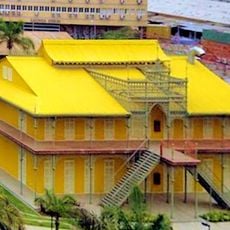
Angola presents a rich blend of history and nature, from the capital city of Luanda stretching into remote provinces. In Luanda, visitors can explore historical structures like Fort São Miguel, the Iron Palace, and the Mausoleum of Agostinho Neto. The city's churches, including Our Lady of the People Church and the Jesuits Church, reveal Angola's religious heritage. The provinces unveil Angola's natural wonders. The lunar landscape of Miradouro da Lua with its red rock formations sits near Luanda. Kalandula Falls in Malanje drops dramatically into the distance. The Christ King Statue overlooks Lubango, while Tundavala in Huíla offers deep gorges. Serra da Leba in Namibe shows mountainous terrain that rises above winding roads. Angola's coastline draws visitors with beaches like Mussulo, Santiago, and Ilha do Cabo. Quiçama National Park offers wilderness and wildlife. Museums in Luanda document the country's history and traditions, while the graveyard of sunken ships and the port of Lobito speak to Angola's maritime past.
Quissama National Park
18.3 km
Fortress of São Miguel
48.3 km
National Museum of Slavery
29.2 km
Palácio de Ferro
48.3 km
Museum of the Armed Forces
48.2 km
Museu Nacional de História Natural de Angola
48 km
Museu Nacional de Antropologia
47.8 km
National Assembly Building of Angola
46.7 km
Avenida Comandante Valódia
48.1 km
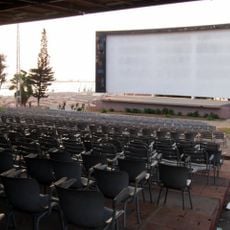
Cine Atlântico
47.2 km
Prédio do Baleizão
48.1 km
Coin Museum
48.3 km
Holy Family Church
47.1 km
Praia de Sangano
38.9 km
Cine‐Esplanada Miramar
49.4 km
Edificio Sonangol
47.9 km
Church of Carmo
47.7 km
Mausoleum of Agostinho Neto
46.5 km
Church of Our Lady of Remedies
47.9 km
Nossa Senhora da Nazaré
48.8 km
Corredor do Kwanza
14.1 km
Praia Amelia
40.1 km
Art Market Benfica Artezanato
29.2 km
Mussulo island Chevron
30.5 km
Igreja de Jesus Sé Catedral
47.3 km
Monument of the Unknown Soldier
48.1 km
Sonangol
48 km
Lady Ana Joaquina Courthouse
48.1 kmVisited this place? Tap the stars to rate it and share your experience / photos with the community! Try now! You can cancel it anytime.
Discover hidden gems everywhere you go!
From secret cafés to breathtaking viewpoints, skip the crowded tourist spots and find places that match your style. Our app makes it easy with voice search, smart filtering, route optimization, and insider tips from travelers worldwide. Download now for the complete mobile experience.
A unique approach to discovering new places❞
— Le Figaro
All the places worth exploring❞
— France Info
A tailor-made excursion in just a few clicks❞
— 20 Minutes