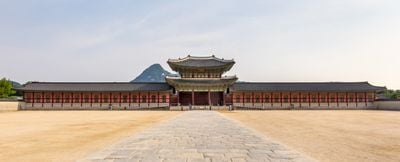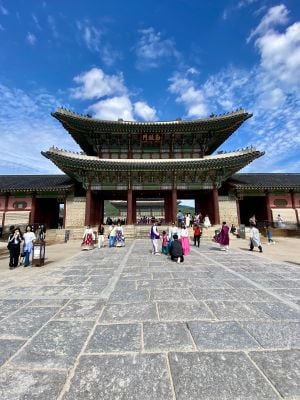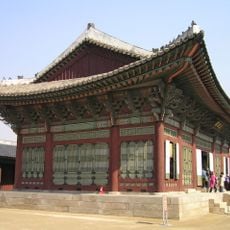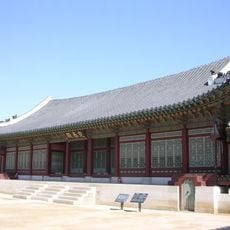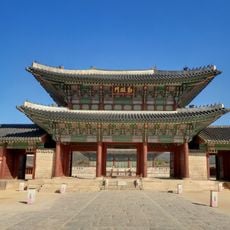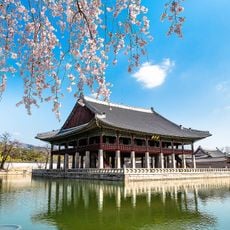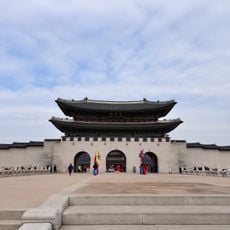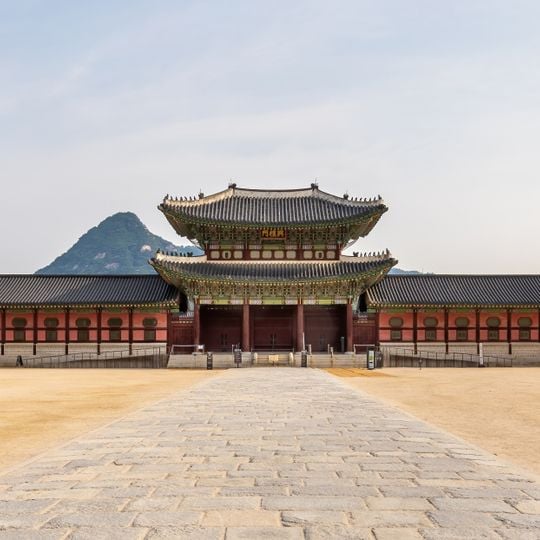
Heungnyemun, Palace gate in Jongno District, Seoul, South Korea
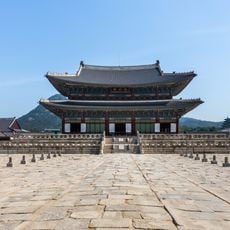
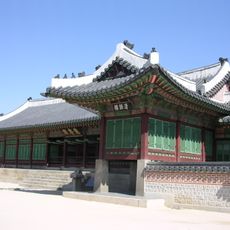
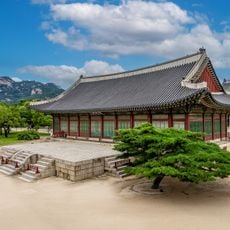
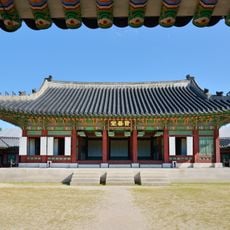
Heungnyemun is a palace gate within the grounds of Gyeongbokgung in the Jongno District of Seoul, South Korea. It is the second gate in the traditional three-gate sequence of the palace, leading into the outer courtyard that was reserved for official ceremonies.
Gyeongbokgung was established as the main royal palace in the early 15th century, and Heungnyemun was built as part of that original layout. The gate was torn down in 1914 for an industrial exhibition, and the current structure was reconstructed between 1997 and 2001 based on historical records.
The name Heungnyemun means roughly "Gate of Flourishing Virtue" in Korean, reflecting the Confucian values that shaped life at the Joseon court. Visitors passing through can notice the painted wooden beams and carved details that are typical of palace architecture from that period.
The gate is easy to find during a visit to Gyeongbokgung, as it sits between the main entrance and the inner palace area. Visiting on a weekday morning tends to mean fewer crowds, which makes it easier to take in the gate and the surrounding space.
The gate's original name was Jeongmun, simply meaning "main gate," but it was renamed in 1426 to avoid using Chinese characters too similar to the reigning emperor's name. This kind of naming sensitivity reflected how carefully Korea managed its diplomatic relationship with China at the time.
The community of curious travelers
AroundUs brings together thousands of curated places, local tips, and hidden gems, enriched daily by 90,880 contributors worldwide.