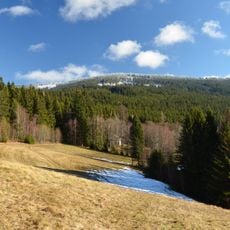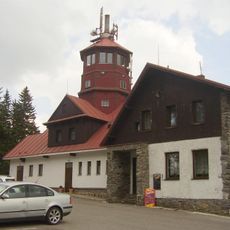
Černé jezero, Glacial lake in Železná Ruda, Czech Republic
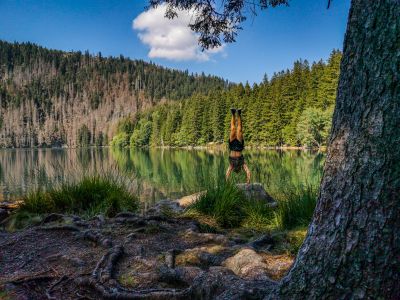
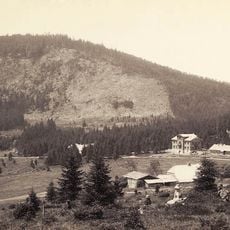
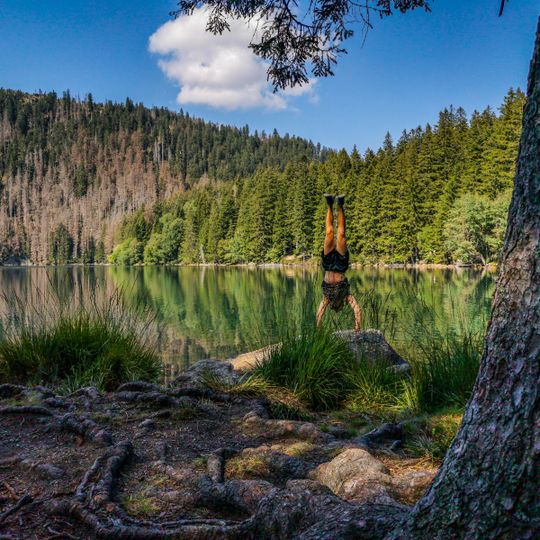
Černé jezero is the largest natural lake in the Czech Republic, a triangular glacial lake of 18.47 hectares lying at 1,008 m beneath the 320 m Jezerní stěna cliff of Jezerní hora. Its rocky bottom is covered by about nine metres of silt built up from pollen over thousands of years, and the water is oligotrophic, clear to a depth of 4–5 m.
The lake lies about 1 km from the German border, and after 1950 it fell inside the border zone, closed to the public. In 1964 the StB, working with the Soviet KGB, sank captured Nazi SS documents in the water and then staged their discovery, an operation called Neptune. Access resumed under border-guard supervision in the 1960s.
The name Černé jezero means Black Lake, from the dark reflection of the surrounding spruce forests. The lake has inspired Czech artists, including Jan Neruda's Romance o Černém jezeře, Adolf Heyduk's U horského jezera, Jaroslav Vrchlický's Černé jezero and Antonín Dvořák's cycle Ze Šumavy, and is linked to many legends.
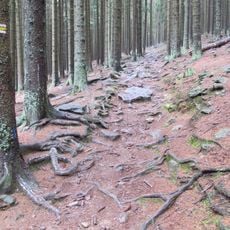
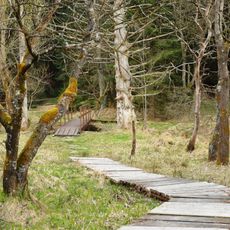
A red-marked KČT trail runs around the lake from Malý Špičák and continues northwest; a yellow-marked trail starts here toward Špičácké sedlo, shared with the NS Špičák–Černé jezero nature trail and cycling route 2055. Since 2018 a tourist train carries up to 60 people from Železná Ruda to the lake several times a day and is adapted for wheelchairs.
Water from the lake flows toward the North Sea through the Elbe River system, making it a key point in a major European watershed division. This invisible boundary shapes the entire landscape and connects the lake to a vast network of rivers and streams.
The community of curious travelers
AroundUs brings together thousands of curated places, local tips, and hidden gems, enriched daily by 92,099 contributors worldwide.