Tule Springs Fossil Beds National Monument, Fossil national monument in North Las Vegas, US.
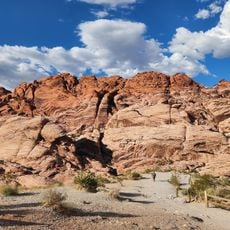
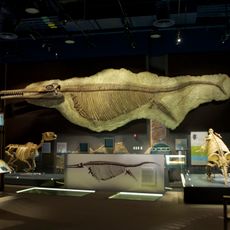
Tule Springs Fossil Beds National Monument covers 22,650 acres of the Upper Las Vegas Wash in the Mojave Desert, 10 miles northwest of Las Vegas. The wash cuts through pale, banded sediment layers that hold fossils of Columbian mammoth, Camelops, ground sloth, dire wolf, Smilodon fatalis and American lion, from 7,000 to 250,000 years old. The rare Las Vegas bear poppy (Arctomecon californica) grows in patches on the wash floor.
Paleontology at Tule Springs began in 1933, when quarry workers found the bones of a Columbian mammoth. Later finds include Camelops, ground sloth, dire wolf, Smilodon fatalis, Teratornis and American lion, ranging from 7,000 to 250,000 years old. A local campaign led Congress to pass protection in December 2014, and President Barack Obama signed it into law on December 19, 2014.
The name comes from tule plants that once grew here and marked the presence of water in this desert landscape. Walking through the area, you can observe how different rock layers tell the story of environmental changes over thousands of years.
Two temporary official trails start at the north end of N. Durango Drive: the flat 1.7-mile Tule Springs loop around the first fossil bed, and the 2.3-mile long loop around the whole bed, which climbs over it. There is no shade, so carry water and sun protection. Off-road driving and shooting are not allowed.
Paleontology at Tule Springs began in 1933, when quarry workers uncovered the bones of a Columbian mammoth. Later finds include Camelops, ground sloth, dire wolf, Teratornis, Smilodon fatalis and American lion, ranging from 7,000 to 250,000 years old. The fossil bed itself is crossed by the 2.3-mile long loop trail.
The community of curious travelers
AroundUs brings together thousands of curated places, local tips, and hidden gems, enriched daily by 92,729 contributors worldwide.