Creek Council Oak Tree, Historic oak tree in Tulsa, United States
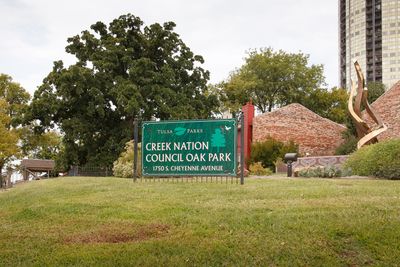
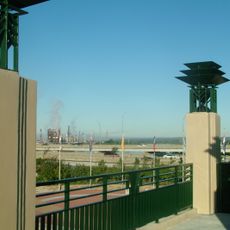
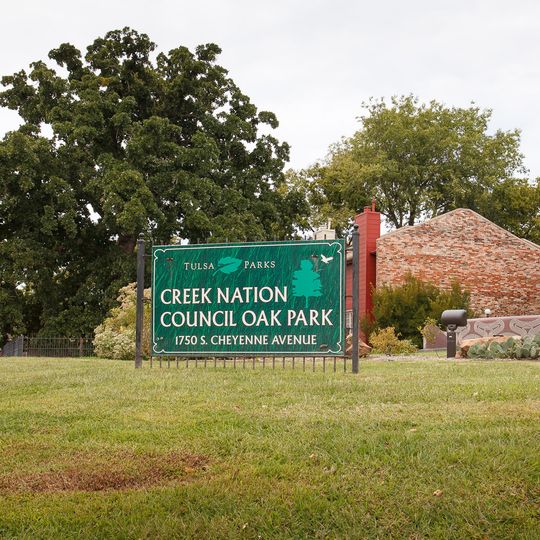
The Creek Council Oak Tree stands on a hilltop overlooking the Arkansas River at the southeastern boundary of the first Creek settlement in this area. The tree sits within a park setting bounded by Seventeenth and Eighteenth Streets at the intersection of Cheyenne and Denver Avenues.
In 1836 the Lochapoka band of the Creek Nation, removed from Alabama, chose an oak on a hill above the Arkansas River as their council ground. They lit a new ceremonial fire from coals carried on the journey and laid out a busk ground for councils, ceremonies, feasts and games, used until 1896. Their village nearby was called talasi, "Old Town".
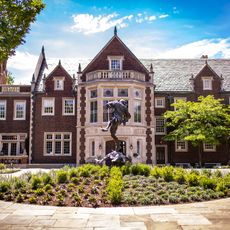
The Lochapoka named their settlement talasi, or "Old Town," beside the oak, and the grounds hosted busk ceremonies, feasts and games until 1896. Each October 20 the Muscogee (Creek) Nation returns for an annual celebration of the 1836 arrival, with the 2008 Trail of Tears monument Morning Prayer, a flame rising from a hearth by Creek artist Dan Brook, standing in the park.
The park occupies 1.86 acres (0.75 ha) at 18th Street and Cheyenne Avenue, in Tulsa's Historic Preservation Zone since January 1992. Enter from the street corners at Seventeenth or Eighteenth and Cheyenne or Denver; the tree stands on the hilltop, with the Trail of Tears monument and garden nearby. The grounds are open and unshaded, so check the weather before a longer stay.
The park includes an ethno-horticultural garden displaying plants traditionally used by the Creek for healing and daily life. This garden offers visitors a chance to learn about the botanical knowledge that was central to the community's survival and wellbeing.
The community of curious travelers
AroundUs brings together thousands of curated places, local tips, and hidden gems, enriched daily by 92,634 contributors worldwide.