Chief Seattle, Copper sculpture in Belltown, Seattle, United States
The Statue of Chief Seattle is a life-size copper sculpture by James Wehn, weighing 136–181 kg, installed in Tilikum Place. Seattle is shown with his right hand extended as if in greeting, standing on a stone base designed to serve as a fountain, which has been turned off and on over the years.
James Wehn was commissioned in 1907, but repeated faulty castings led to the piece being sent to New York to be cast. Myrtle Loughery, a great-great-granddaughter of Chief Seattle, unveiled it at Tilikum Place on November 13, 1912; it was the first sculpture commissioned in Seattle and the city's second public artwork. Cleaning preceded the 1962 Century 21 Exposition, and Wehn opposed a plan to turn it toward the new Monorail. A 1980 cleaning by a taxi driver scratched the green patina and exposed the original bronze, and restoration showed the statue had first been gilded.
The city of Seattle is named after Chief Seattle, a leader of the Suquamish and Duwamish peoples. He advocated peaceful coexistence with white settlers and befriended David S. Maynard, the settler who founded the city and gave it the chief's name. The statue was unveiled by his great-great-granddaughter Myrtle Loughery in 1912.
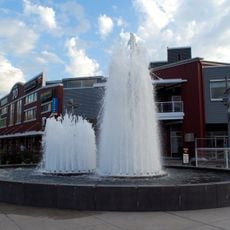
The statue stands in Tilikum Place, a small triangular plaza at the corner of Fifth Avenue and Denny Way, near the Seattle Center Monorail station. It is outdoors and viewable at any hour. The stone base was built as a fountain, which has been switched on and off over the years, so water may or may not be running.
In 1980 a taxi driver tried to clean the statue himself, scratching the surface and exposing its original bronze colour. The restoration that followed found the figure had first been gilded with gold leaf. The statue was added to the National Register of Historic Places on April 19, 1984.
The community of curious travelers
AroundUs brings together thousands of curated places, local tips, and hidden gems, enriched daily by 92,632 contributors worldwide.