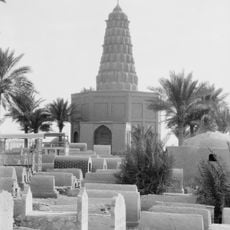
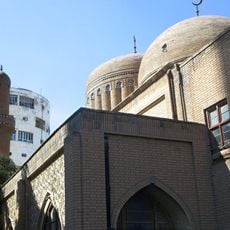
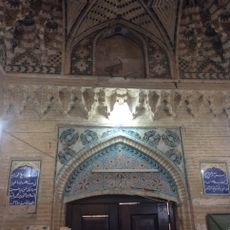
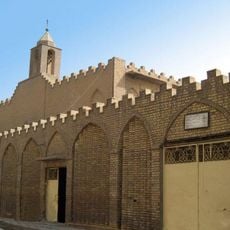
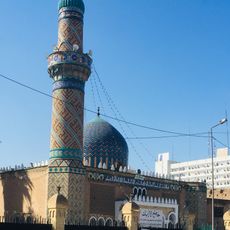
Al Asafi Mosque, Religious sanctuary in Al-Rusafa district, Baghdad, Iraq.
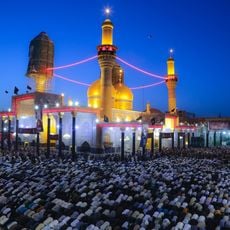
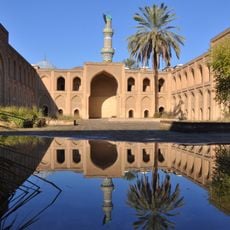
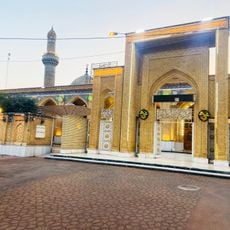
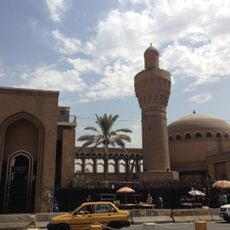
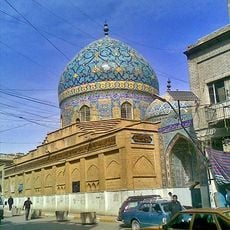
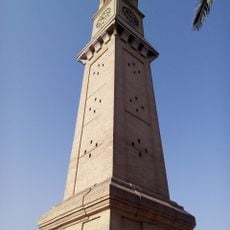
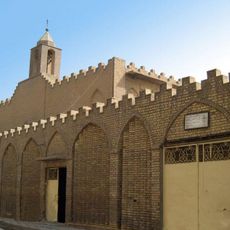
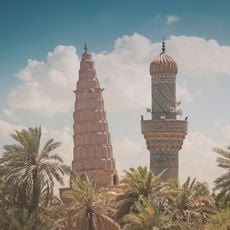
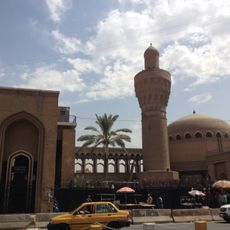
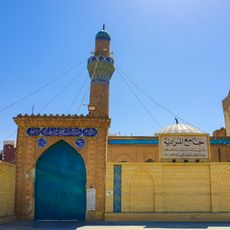
Al Asafi Mosque stands on the middle of Officers Street (Shari al-Dubbat) in the Raghiba Khatoon area of al-Adhamiya, Baghdad. Its 2,000 m² grounds hold a large prayer hall covered by a big dome clad in blue tile, a marble-clad mihrab, a pulpit of decorated sheet wood topped by a small dome, and an external portico with rooms for the imam and the caretaker. A 25-metre brick minaret, also faced in blue tile and built in the Baghdadi style, rises from a door inside the hall.
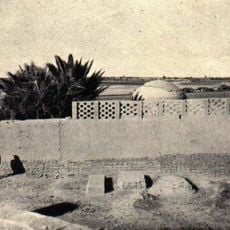
Abdul Aziz al-Asafi, a Najdi merchant whose father Salih moved from Unayzah to Baghdad around 1880, paid for the mosque. It was built in 1956 (1376 AH) and inaugurated by King Faisal II in 1957. Sheikh Najm al-Din al-Wa'iz served as its imam and preacher until 1965, followed by figures such as Dawud and Zafir al-Alusi.
The mosque serves as a gathering place where residents come together for prayer and social occasions. It holds meaning as a community center in the neighborhood where people maintain their religious and social bonds.
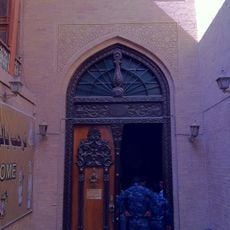
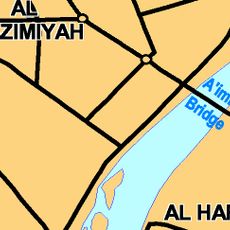
The main entrance opens onto the public street in the middle of Officers Street, Raghiba Khatoon, in the Al-Azamiyah district of Rusafa. The mosque covers 2,000 square metres and holds roughly 2,000 worshippers. The minaret door is inside the prayer hall, and the minaret rises about 25 metres. Friday, Eid and the five daily prayers are held.
The mosque is often mistakenly called Jami' al-Asaf, a name that appears even on some official signs; the builder's family is Al-Asafi, while Al-Asaf is a different family. The minaret rises about 25 metres, is built of brick clad in blue tile, follows a Baghdadi architectural style, and its door opens from inside the prayer hall.
The community of curious travelers
AroundUs brings together thousands of curated places, local tips, and hidden gems, enriched daily by 92,612 contributors worldwide.