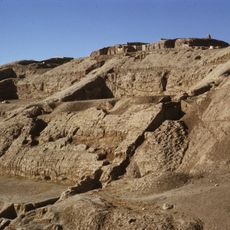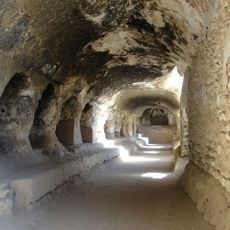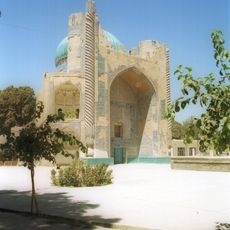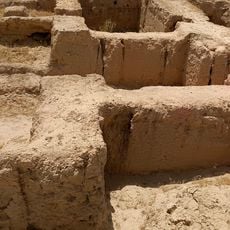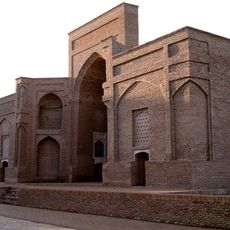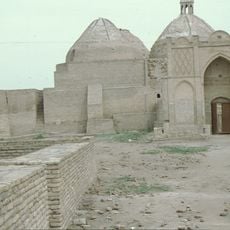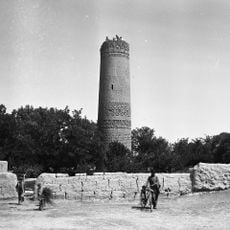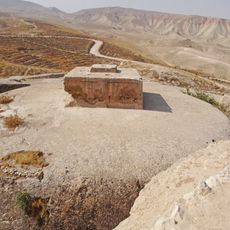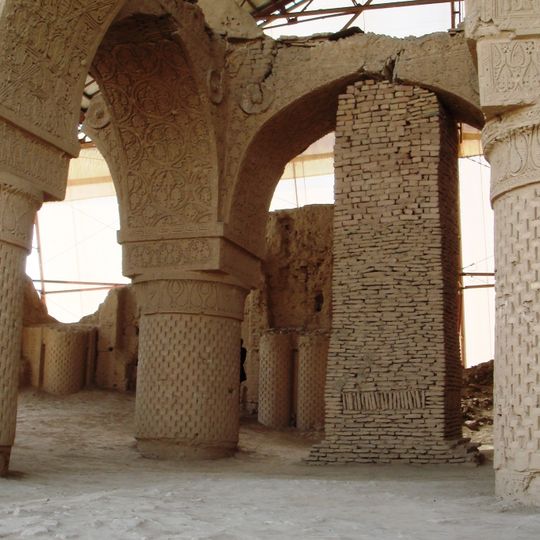
Haji Piyada, Archaeological ruins in Balkh, Afghanistan.
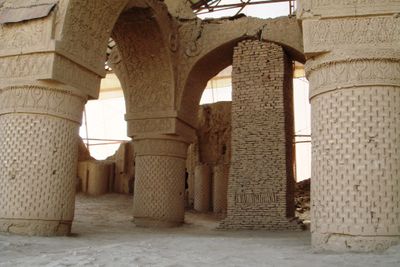
Haji Piyada is a mud-brick mosque in Balkh, Afghanistan, built on a square plan with each side measuring roughly 20 meters (65 feet). The interior was originally divided into nine bays, some of which were topped by domes that have partly collapsed over the centuries.
The mosque was built in 794 by Abbasid governor Fazl ibn Yahya on the site of an older Buddhist complex. This shift reflects the deep changes the region went through in the centuries following the Islamic conquest.
The interior walls carry stucco decorations made in the early Abbasid style but executed using local craft methods. Visitors who look closely can see how regional building traditions and new religious influences came together in a single structure.
A metal roof has been installed over the building to protect it from rain and weather. The ground is uneven and parts of the structure have collapsed, so sturdy footwear and careful footing are both important.
The name Noh Gonbad, 'Mosque of Nine Cupolas', refers to the nine domed bays of the interior, all of which have since collapsed. The conservation project launched in 2009 by the Aga Khan Trust for Culture, funded by the US Embassy in Kabul and coordinated by scholars from the University of Florence, completed its first phase in 2011.
The community of curious travelers
AroundUs brings together thousands of curated places, local tips, and hidden gems, enriched daily by 92,659 contributors worldwide.