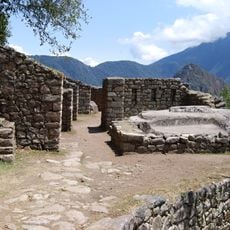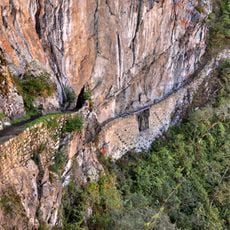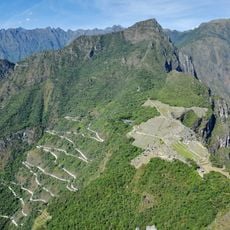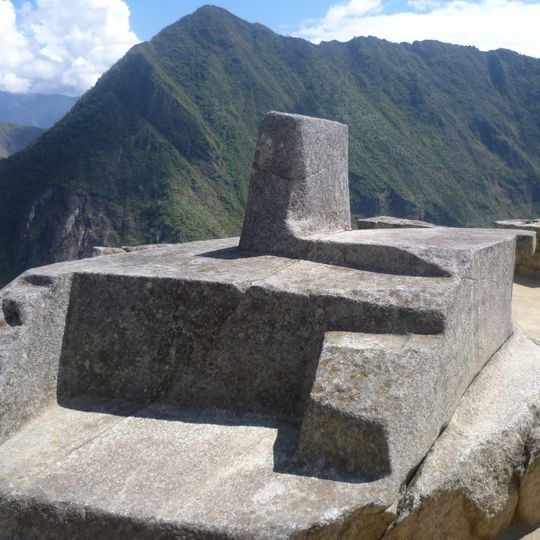
Intihuatana, Urubamba, Sundial at Machu Picchu, Peru
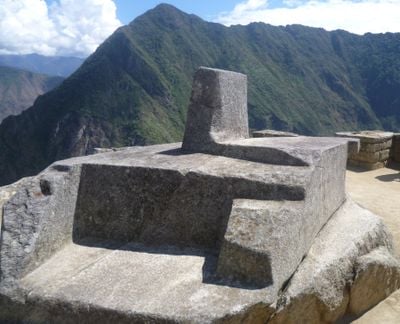
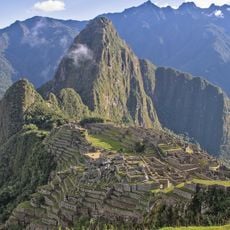
The Intihuatana is a carved granite stone with four sides oriented to the cardinal directions, located within Machu Picchu's urban core. The structure stands at an elevated position and commands views across the ruins below it.
This stone was built during the 15th century under Emperor Pachacútec's rule, when Machu Picchu served as a major Inca center. It remained hidden from the outside world for centuries until explorers brought attention to the site in the early 1900s.
The stone served as a gathering place where the Inca performed ceremonies linked to the sun and seasons. Today, visitors can stand at this spot and feel the connection between the landscape and the celestial patterns above.
The stone sits at the highest point of the urban sector and is reached by climbing staircases from the north or south side. The ascent is steep, so wear comfortable shoes and plan to visit early in the day when fewer people are around.
The name combines two Quechua words: Inti means sun and Huatana means to tie or hold fast. This naming reflects how the Inca viewed the stone as a place where they could, in a symbolic sense, capture or anchor the sun itself.
The community of curious travelers
AroundUs brings together thousands of curated places, local tips, and hidden gems, enriched daily by 91,250 contributors worldwide.