Patallaqta, Archaeological site in Urubamba Valley, Peru
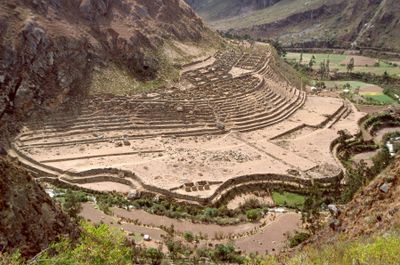
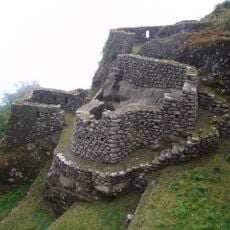
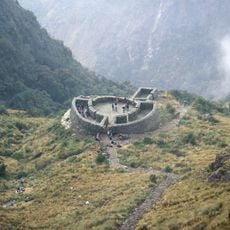
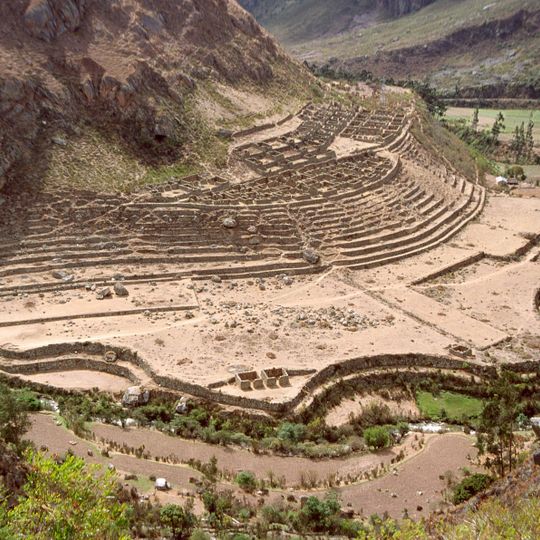
Patallaqta is an archaeological site of about one hundred houses, according to Herman Tucker, with outer walls still standing. It sits at the confluence of the Cusichaca and Vilcanota rivers on a mountain also named Patallaqta, within the Santuario Histórico de Machupicchu. The photograph shows rectangular enclosures of light brown stone on stepped platforms above curving terrace walls of stacked stone.
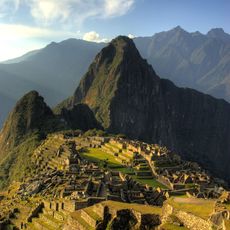
Patallaqta was an Inka settlement of about one hundred houses at the confluence of the Cusichaca and Vilcanota rivers, housing travellers and soldiers who manned the nearby hill fort of Willkaraqay. In 1536 Manco Inca Yupanqui burned it during his retreat from Cusco, destroying settlements along the Inka road system to discourage Spanish pursuit. Hiram Bingham later passed the site on his way to Machu Picchu.
The name comes from Quechua words meaning elevated place and settlement on a platform, showing how indigenous people understood their landscape. Visitors can see this platform concept reflected in how the buildings sit on the hillside today.
The site lies at the start of the Classic Inca Trail and requires a permit before visiting. The best time to explore is during the drier months, when mountain paths are accessible and safe.
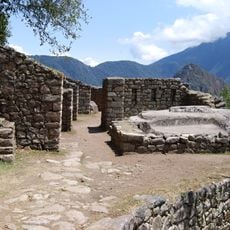
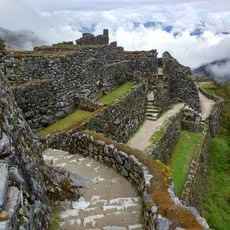
The sources disagree on whether the site was burned: the English article states that Manco Inca Yupanqui burned Patallaqta in 1536 during his retreat from Cusco, while the German article says the town survived the Spanish conquest undestroyed. Visitors can still see the outer house walls standing among the terraces.
The community of curious travelers
AroundUs brings together thousands of curated places, local tips, and hidden gems, enriched daily by 92,651 contributors worldwide.