Salcantay, Mountain summit in Cusco Region, Peru
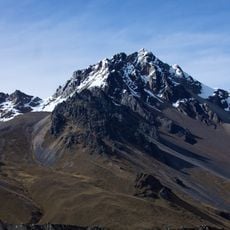
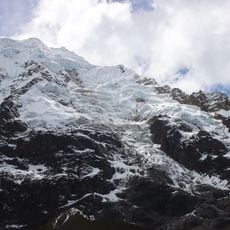
Salcantay is the highest peak of the Vilcabamba range in the Peruvian Andes, rising to 6,264 metres in the Cusco Region about 60 km west-northwest of Cusco. Its summit is a broad snow dome split into an east and a west top, with steep rock ribs and gullies below and forested slopes meeting in a V-shaped valley at its base.
Salcantay was first climbed in 1952 by a French-American expedition; all but three of its nine members reached the summit. In 1953 Lionel Terray, T. de Booy and Raymond Jenny opened the North spur route, now called the Terray spur. A plaque below the Palcay col commemorates two climbers lost on the northeast ridge.
The name comes from Quechua sallqa, meaning wild or savage, recorded as early as 1583, and the peak is called Apu Salkantay, an apu being a mountain lord. The Incas counted it among the deities governing weather and fertility west of Cusco, and from Machu Picchu's sundial the Southern Cross stands over its summit in the rainy season.
Reaching the summit typically requires three days of travel from Cusco through challenging terrain with ice, snow, and rock. Visitors should prepare for extreme altitude, rapidly changing weather conditions, and significant physical exertion.
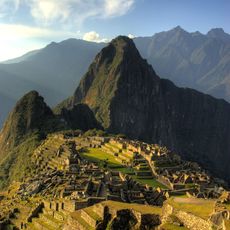
From the main sundial of Machu Picchu, directly north of Salcantay, the Southern Cross stands above the summit at its highest point in the rainy season. The Incas linked this alignment to rain and fertility, and the peak was one of the principal deities controlling weather west of Cusco.
The community of curious travelers
AroundUs brings together thousands of curated places, local tips, and hidden gems, enriched daily by 92,629 contributors worldwide.