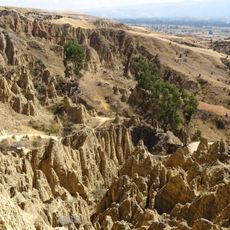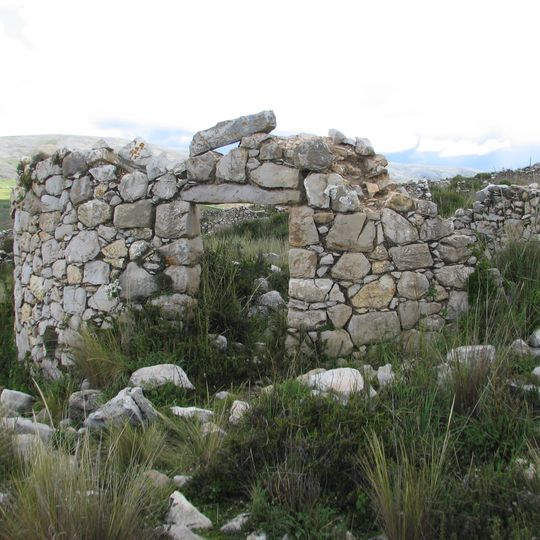
Tunanmarka, Archaeological site in Tunan Marca District, Jauja Province, Peru.
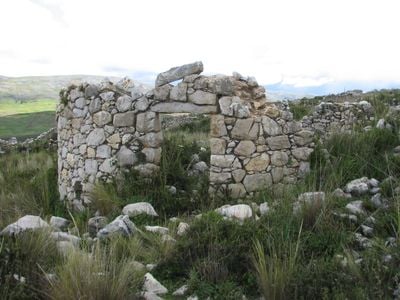
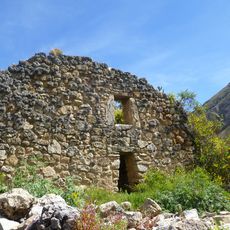
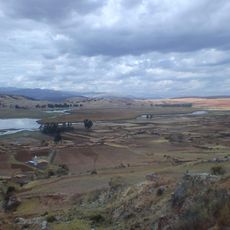
Tunanmarka is an archaeological complex in the Mantaro Valley region with multiple stone structures arranged in circular patterns across the elevated terrain. The buildings were constructed by stacking stones, and together they form nested settlement levels that rise up the mountainside.
Tunanmarca was built and occupied mainly between 1280 and 1425 AD, according to radiocarbon dates, with occupation continuing until about 1460, when the Inca prince Túpac Yupanqui conquered the Mantaro Valley. The site was also known as Siquillapucara. After the Inca takeover it lost importance to Hatun Xauxa, the new provincial capital, and Cusco families called mitimaes were settled in the valley.
The name Tunanmarca joins two Quechua words: tunan, "point or tip", and marca, "town", giving "town at the tip of the hill", after the summit of Cerro Tunun where it stands. The site also appears in sources as Siquillapucara. Its identification as the "capital" of a Huanca kingdom was proposed by Waldemar Espinoza Soriano and, though lacking firm ethnohistorical or archaeological support, took hold in the modern identity of Huancayo.
The site lies 20 km west of Jauja at 3,800 m above sea level, on the summit of Cerro Tunun beside the village of Concho. The climb is steep and the altitude demanding, so allow time to acclimatise and carry water. The ruins stand in the open, with no facilities on site.
On 26 November 2013 the Central Reserve Bank of Peru issued 10,000 one-nuevo-sol coins of the Wealth and Pride of Peru series showing Tunanmarca's buildings, engraved "1 NUEVO SOL TUNANMARCA S. XIII - XVI d.c.". The site had been declared a National Cultural Heritage by Resolución Directoral Nacional No. 1359/INC on 9 November 2000.
The community of curious travelers
AroundUs brings together thousands of curated places, local tips, and hidden gems, enriched daily by 92,782 contributors worldwide.