Huagapo, Natural cave system in Palcamayo district, Peru
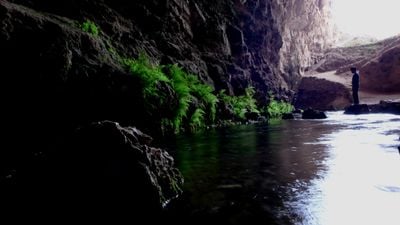
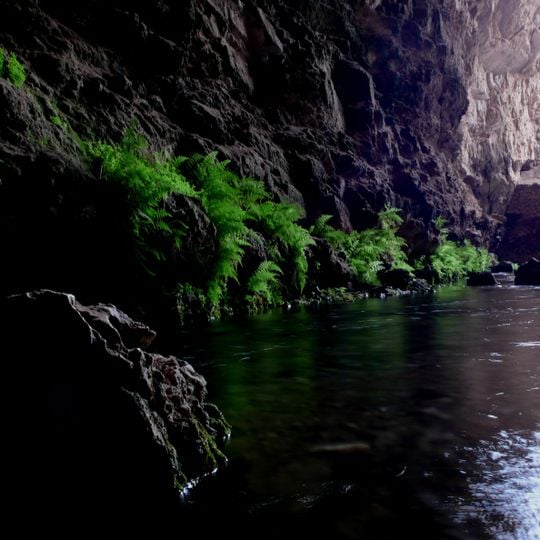
Huagapo is a cave system in Palcamayo district featuring a large entrance opening and extensive underground passages that spread through multiple chambers. The cavern extends deep beneath the surface with different-sized rooms formed through natural geological processes over thousands of years.
The cave became known around 1938 through the Tarma guide José G. Otero, who visited it with students from Tarma. In 1965 Modesto Castro Choque Huanca settled opposite the entrance and still works as a guide. A Peruvian expedition led by César Morales Arnao explored 480 m in 1969; Polish, British and French teams followed in 1972 and 1976, and a Peruvian-French expedition reached 2,747 m in 1994.
The name joins the Quechua words huaga ("tears") and apu ("powerful"), giving "tears of the powerful". A local legend says the water leaving the cave is the eternal weeping of priestesses punished by the Sun god, and that the stalagmites are the petrified priests. Visitors can also look for cave paintings of a llama, taruca, guanaco, serpent and worm, and hunting scenes.
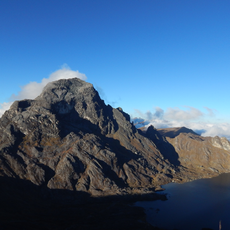
The entrance lies on the flank of Cerro Racasmarca at 3,572 m above sea level, reached by road from Tarma via Acobamba and Palcamayo, or via San Pedro de Cajas. The mouth measures about 18.90 m high by 33.50 m wide, and a roughly 100 m tunnel on the right side carries the outflow, which forms waterfalls best seen in February, March and April. Expeditions have mapped passages to 2,747 m, so the interior is for guided visits only.
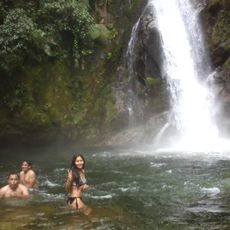
The stream leaving the cave pours from a tunnel about 100 metres long on the right side of the entrance, breaking into a chain of waterfalls that local people liken to a bride's veil; they are fullest in February, March and April.
The community of curious travelers
AroundUs brings together thousands of curated places, local tips, and hidden gems, enriched daily by 92,620 contributors worldwide.