Huayllay National Sanctuary, Nature reserve in Huayllay District, Peru.
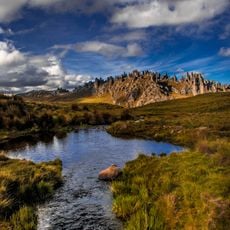
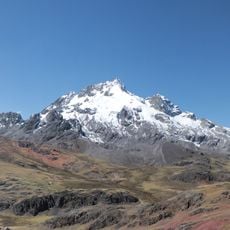
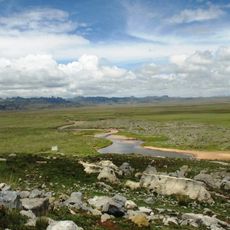
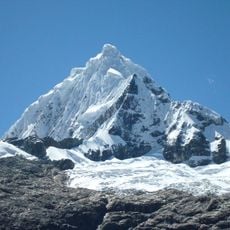
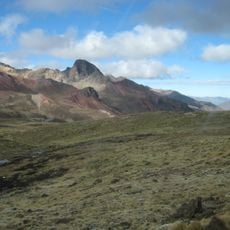
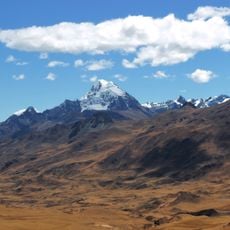
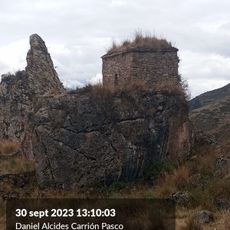
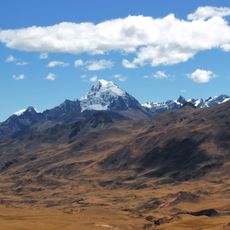
Huayllay National Sanctuary is a protected area of 6,815 hectares on the Meseta de Bombón, in the Pasco Region of Peru, with the Huayhuash range as a backdrop. Its core is the Bosque de Rocas, a field of eroded volcanic rock at 4,100–4,600 m, where wind, water and past glaciers have cut gateways and figures; a thermal spring reaches over 60 °C.
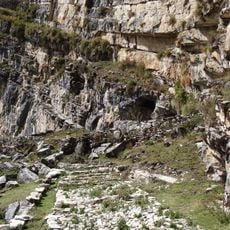
The rock formations date to the beginning of the Cenozoic era, when volcanic activity deposited layers of hardened volcanic ash, or ignimbrite, over sandstone, limestone and conglomerate, forming a plateau. About 20,000 years ago, during the last ice age, repeated freezing and thawing of snow sent meltwater into cracks in the porous ignimbrite, enlarging them until large portions of rock crumbled away and left the eroded forms of the Bosque de Rocas.
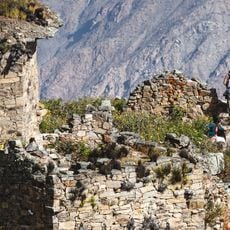
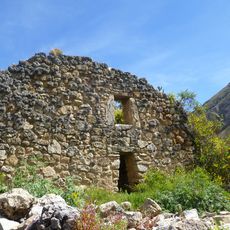
The sanctuary's rock forest holds cave paintings made by earlier inhabitants of the plateau. The name Huayllay comes from the Quechua word waylla, meaning green meadow, a reference to the grassland among the stone. Visitors also come for the thermal spring inside the rock forest, whose water reaches over 60 °C at 4,000 m.
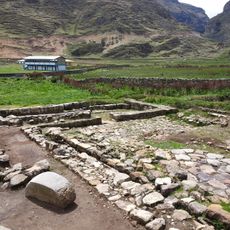
The reserve sits at high elevation in a mountain region where temperatures drop significantly, so warm and layered clothing is essential regardless of weather appearance. Sturdy footwear is important due to the uneven rocky terrain throughout the site.
Natural erosion has shaped the rocks to resemble human figures, animals, and architectural forms when viewed from different angles. Visitors often spend time spotting these unexpected likenesses scattered throughout the landscape.
The community of curious travelers
AroundUs brings together thousands of curated places, local tips, and hidden gems, enriched daily by 94,338 contributors worldwide.