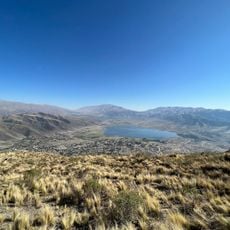
Parque provincial de los Menhires, Archaeological park in Tafí Valley, Argentina.
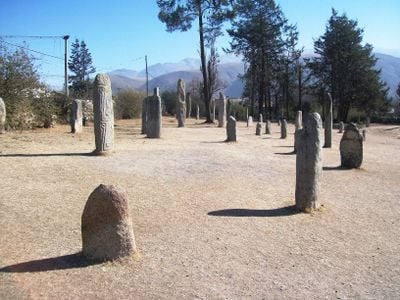
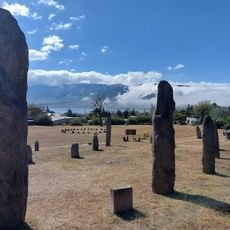
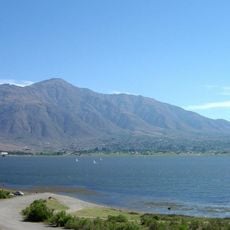
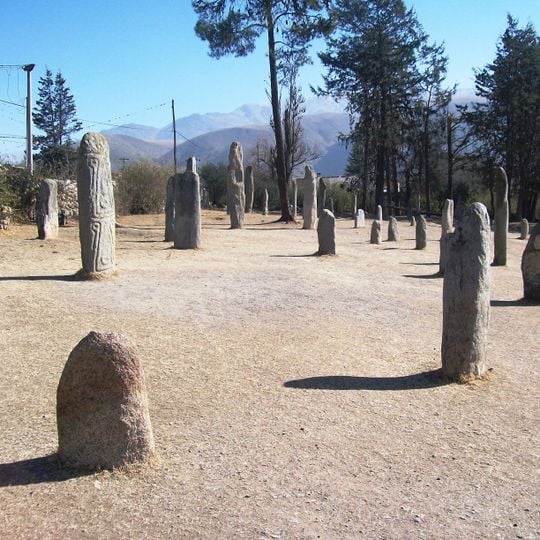
The Reserva Arqueológica Los Menhires holds around 100 upright granite monoliths set on flat, dry ground at the foot of the Tafí Valley, facing the La Angostura reservoir near El Mollar. The tallest reach about 5 m, 1 m wide and 4.5 t; carvings of faces, patterns and symbols are cut on a single flat face of each stone, as on the large pale gray monolith in the foreground.
The monoliths were carved and moved about 2,000 years ago by the Tafí culture, dated between 200 BC and AD 800. The first field study was published by Juan Bautista Ambrosetti in 1897, and 114 menhirs were later counted. In 1977 the military government moved many stones to the Loma de la Angostura park, and they were later transferred to the current reserve in El Mollar.
The word menhir comes from Celtic: men, stone, and hir, long. The Tafí culture carved the monoliths as ithyphallic symbols for a fertility cult, with carvings on a single face. Later the Santa María culture, called Calchaquíes by the Spanish, reused them and adorned them with feathers; the Spanish called them mochaderos.
The reserve lies on provincial Route 307 at the entrance to El Mollar, about 107 km from San Miguel de Tucumán, opposite the La Angostura dam. The monoliths stand on open, flat gravel ground with no shade, so bring sun protection and water. The stones are exposed to the weather and some are damaged; keep to the paths and do not touch the carvings.
The monoliths are considered the youngest menhirs known, carved around 2000 years ago, and their carvings sit on a single face, suggesting a front side. Many originally faced east toward the sun deity, but this orientation was lost when the military dictatorship of 1976–1983 gathered them into a park.
The community of curious travelers
AroundUs brings together thousands of curated places, local tips, and hidden gems, enriched daily by 94,460 contributors worldwide.