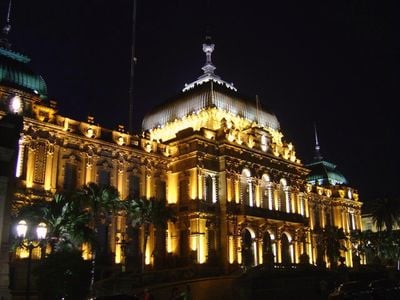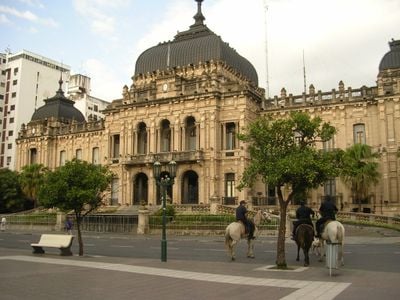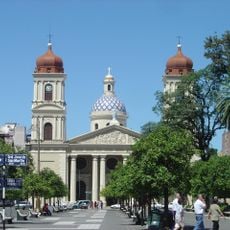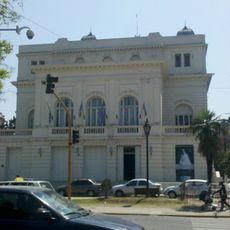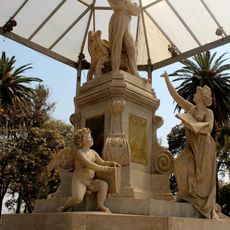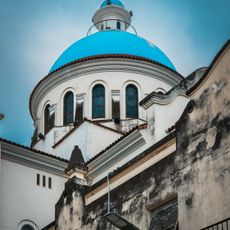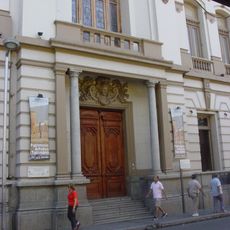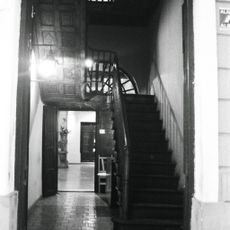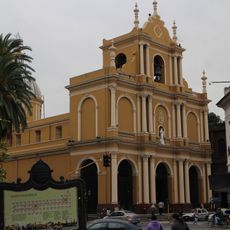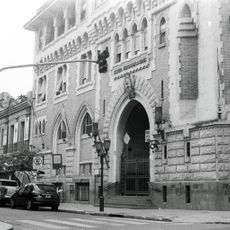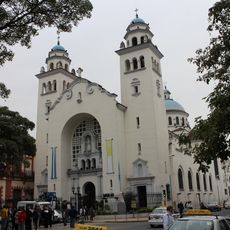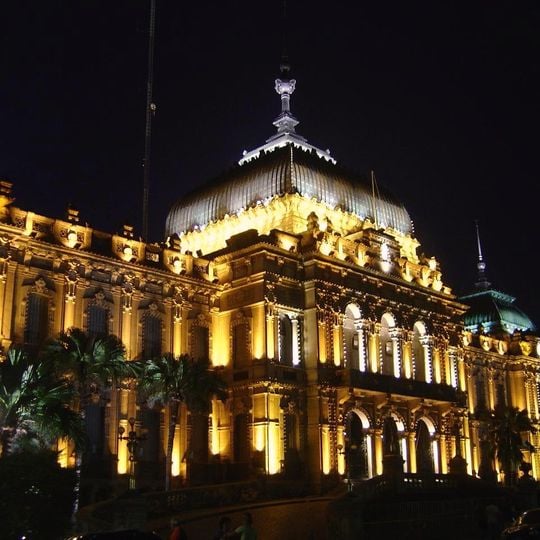
Tucumán Government Palace, National historical monument in San Miguel de Tucumán, Argentina.
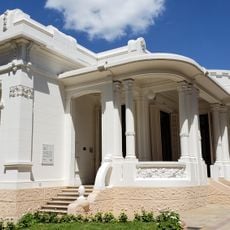
The Tucumán Government Palace combines French baroque with Italianate architectural elements, featuring symmetrical wings and a central dome that faces Plaza Independencia. The building serves as the seat of provincial administration and maintains its original structural design from the early twentieth century.
Governor Luis F. Nougués commissioned the palace to replace the colonial cabildo, which had housed his offices, a courtroom and a small jail. Architect Domingo Selva designed it in an eclectic French baroque style with Italianate influence. Construction began in 1908 after the cabildo's demolition and two adjoining properties were bought; the building was completed in 1910 and inaugurated on 9 July 1912 by Governor José Frías Silva and President Roque Sáenz Peña.
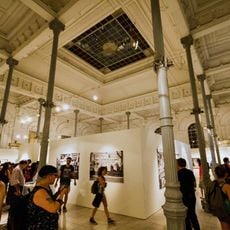
The Salón Blanco, used for official ceremonies, has spiderweb chandeliers and ceiling panels painted by the Spanish artist Julio Vila y Prades, restored by the Tucumán sculptor Santos Legname. The room shows how the province presented itself in the early 20th century.
The palace is open for guided tours; the sources give no fixed days or hours, so confirm times with the provincial government before going. It still houses the governor's offices, so expect security checks and restricted areas. The main entrance faces Plaza Independencia, and the crypt holding Juan Bautista Alberdi's remains is in the basement.
The basement crypt holds the remains of a key figure in Argentina's constitutional history, relocated here decades after his original burial elsewhere. Few visitors realize that this government building also serves as a final resting place for someone central to the nation's founding documents.
The community of curious travelers
AroundUs brings together thousands of curated places, local tips, and hidden gems, enriched daily by 92,790 contributors worldwide.