Pucará de Tilcara, Pre-Inca fortress and archaeological site in Tilcara, Argentina
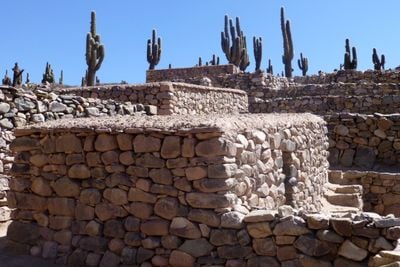
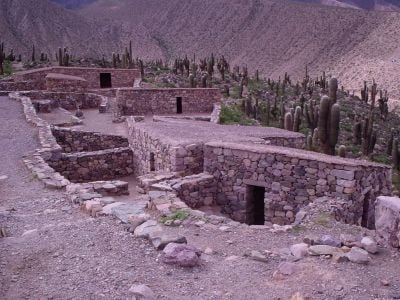
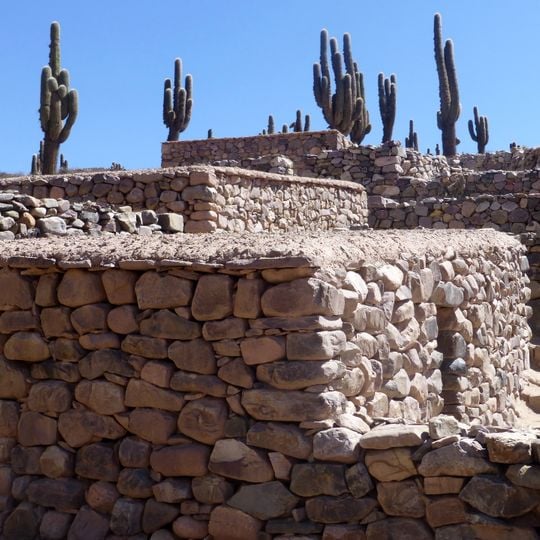
Pucará de Tilcara is a fortified settlement of rough, mortarless stone walls on a morro 80 metres above the confluence of the Huasamayo and Grande rivers, 1 km south of Tilcara. Rectangular roofless enclosures with low walls and small dark openings step up the slope, divided into quarters, corrals, a necropolis and a ceremonial area. A truncated pyramid on the site does not belong to the regional building tradition.
The Omaguaca people built this fortified settlement around 1100 as a military stronghold in this mountainous region. Centuries later, it became a significant post when the Inca expanded into the area during the 1400s.
The name comes from the Tilcaras, a subgroup of the Omaguacas who built the settlement. Under Inca rule the site became the capital of the Humahuaca province, with state workshops producing alabaster and marble objects sent to Cusco as tribute, and it was the residence of the curaca family of Viltipoco. A tomb of an Inca noblewoman with her grave goods was found here.
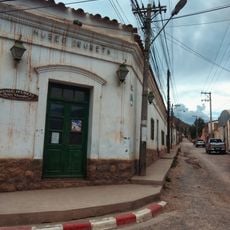
The climb to reach the fortress is steep, so wear sturdy shoes and allow extra time for the uphill walk. An attached archaeological museum at the base lets you examine objects found at the site and learn more about the region's history.
The site's reconstruction is largely the work of Salvador Debenedetti, who from 1911 cleared about 2,000 square metres and raised walls to just over a metre; Eduardo Casanova completed the work from 1948. A truncated pyramid on the grounds does not belong to the region's architectural tradition.
The community of curious travelers
AroundUs brings together thousands of curated places, local tips, and hidden gems, enriched daily by 92,780 contributors worldwide.