Massif of Urucum, Mountain summit near Corumbá, Brazil
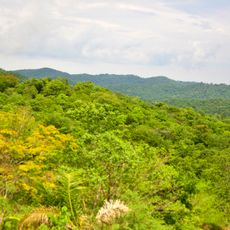
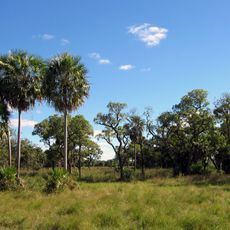
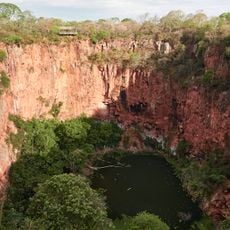
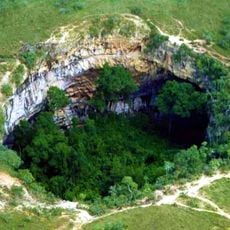
Maciço do Urucum is a mountain massif in the rural zone of Corumbá, Mato Grosso do Sul, reaching 1,065 metres, the highest point in the state. Its rocks date from the Neoproterozoic, 800 to 500 million years ago, and hold iron and manganese ore that is mined for export, mainly to China and Argentina.
Manganese deposits at the massif were known from 1870 but were only confirmed in 1909 by the geologist Miguel Arrojado Ribeiro Lisboa. Mining of the iron and manganese ore later developed for export, chiefly to China and Argentina, and the massif is worked by Rio Tinto Group and Vale do Rio Doce.
The name Urucum comes from the urucum plant, whose red seeds were used by Indigenous peoples as body paint and dye. The massif's iron-rich rock shares that reddish tone. In 2014 the massif hosted the flight competitions of the Pantanal International Adventure Games, an event that brought athletes to its slopes.
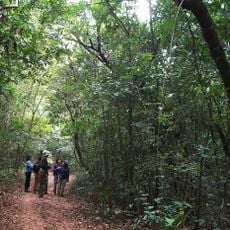
You can reach the massif via roads from Corumbá, with guided tours available through local agencies that provide transportation and equipment. Bringing comfortable hiking boots and plenty of water is advisable, as the ascent can be demanding.
As you climb, you can see how the earth tones shift from orange to deep red across the slope. This color variation happens because iron oxide concentrations differ throughout the rock layers.
The community of curious travelers
AroundUs brings together thousands of curated places, local tips, and hidden gems, enriched daily by 94,340 contributors worldwide.