Mapungubwe National Park, National park in Limpopo Province, South Africa
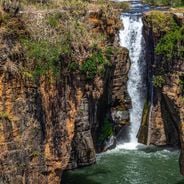
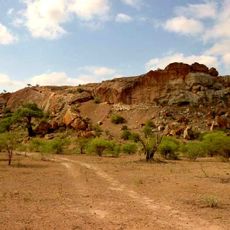
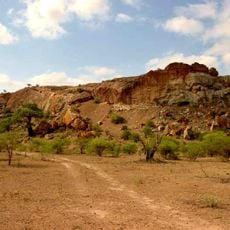
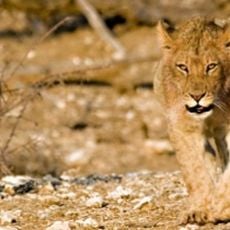
Mapungubwe National Park stretches across 28,000 hectares (69,170 acres) at the confluence of the Limpopo and Shashe rivers where South Africa, Botswana, and Zimbabwe meet. The terrain features archaeological sites, sandstone ridges, and wildlife ranging from meerkats to Nile crocodiles.
Mapungubwe Hill was the capital of the Kingdom of Mapungubwe, whose civilisation flourished between 1200 and 1270. The area had been settled from around 900 by iron-working people who grew wealthy through trade with Egypt, India and China. Archaeologists recovered the Golden Rhinoceros figurine from the hill.
The kingdom that centred on Mapungubwe Hill between about 900 and 1270 grew wealthy through trade with Egypt, India and China, exchanging gold and ivory for glass beads and cloth. Archaeologists recovered the Golden Rhinoceros of Mapungubwe figurine from the hill. Finds from the site are displayed in the park's museum and interpretive centre, whose building won the World Architecture Festival's World Building of the Year in 2009.
Register at the main gate before heading to accommodations such as Leokwe Camp, Tshugulu Lodge, or Limpopo Forest Camp. Plan visits during cooler months when temperatures are comfortable and wildlife is more active throughout the day.
The park holds one of the largest baobabs recorded in South Africa, a specimen with a circumference of 31 metres (102 ft). The Mapungubwe Museum and Interpretive Centre, which displays artefacts found in the park, won the World Architecture Festival's World Building of the Year award in 2009.
The community of curious travelers
AroundUs brings together thousands of curated places, local tips, and hidden gems, enriched daily by 93,094 contributors worldwide.