Nyanga National Park, National park in Eastern Highlands, Zimbabwe.
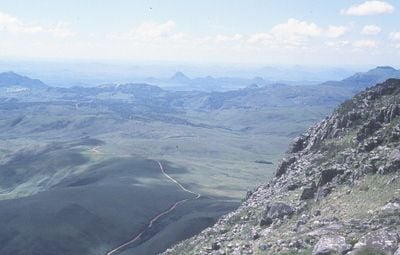
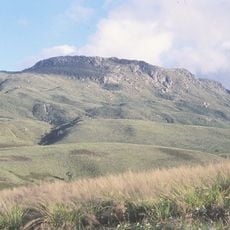
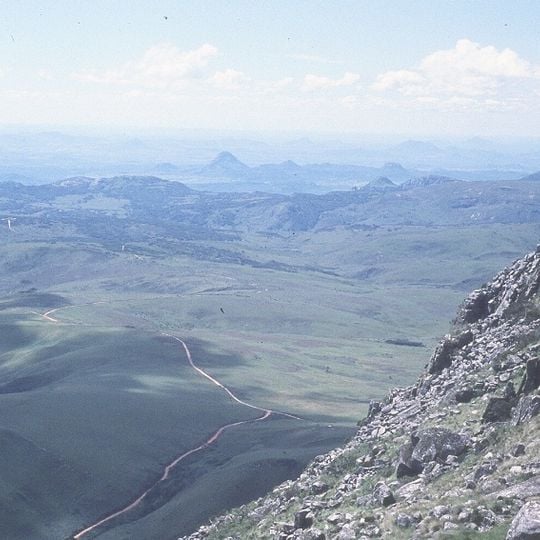
Nyanga National Park covers 47,000 hectares of rolling downland in Zimbabwe's Eastern Highlands, between 1,800 and 2,593 metres. Mount Nyangani, the country's highest peak, rises in the centre, and the Pungwe River drops 240 metres into the wooded Pungwe Gorge. The park is underlain mostly by granite, with dolerite forming the highest ridges and cliffs.
The park was established in 1950 as Rhodes Inyanga National Park following a bequest from Cecil Rhodes. Expansion occurred in the late 1990s when additional farmland was purchased and incorporated into the reserve.
The Ziwa people built homesteads centred on pit structures, once wrongly called slave pits, and larger hilltop settlements known as Forts between the 15th and 17th centuries. Nyangwe Fort near Mare Dam is the most extensive and best-preserved ruin in the park, while Chawomera Fort above the Nyangombe River is reached by a gravel road north of park headquarters.
The park lies about 105 km north of Mutare in Manicaland province. Five dams were built for recreation and tourist water supply: Rhodes and Mare dams on the Mare River, Lake Gulliver and Purdon dams on its tributaries, and Udu Dam on a Nyangombe tributary. Three of the Ziwa ruins are easy to reach: Chawomera Fort on a gravel road north of park headquarters, Nyangwe Fort near Mare Dam, and a third site. Summer temperatures reach 26 °C, winter drops to −3 °C.
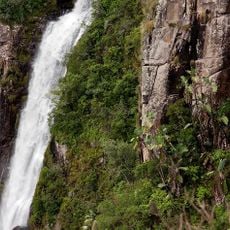
The reserve contains Mutarazi Falls, Zimbabwe's highest waterfall, plunging approximately 760 meters down a sheer cliff face in a single dramatic drop. Multiple streams throughout the park are stocked with rainbow trout, offering fishing opportunities for those interested in angling.
The community of curious travelers
AroundUs brings together thousands of curated places, local tips, and hidden gems, enriched daily by 94,095 contributors worldwide.