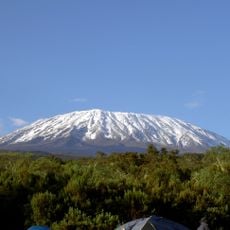
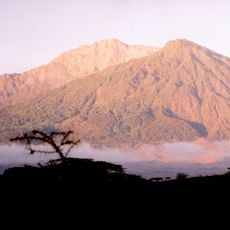
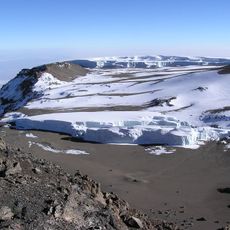
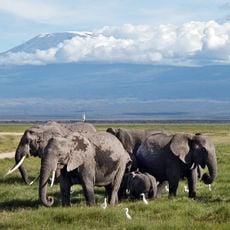
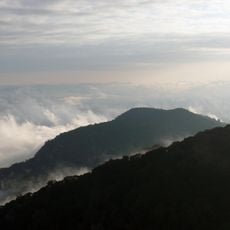
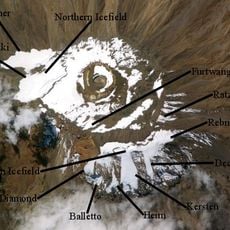
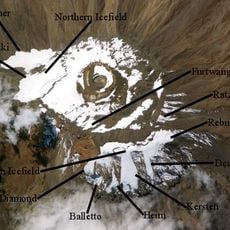
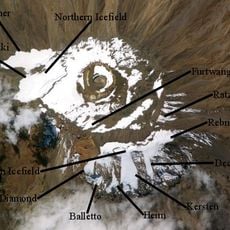
Great Penck Glacier, Extinct glacier on Mount Kilimanjaro, Tanzania.
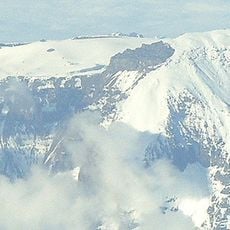
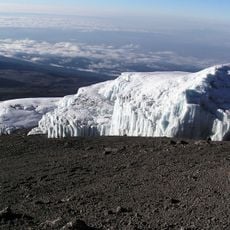
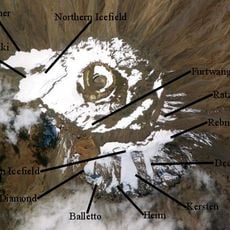
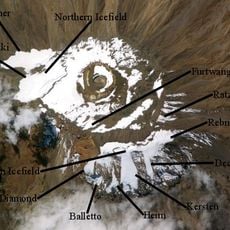
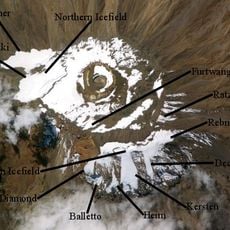
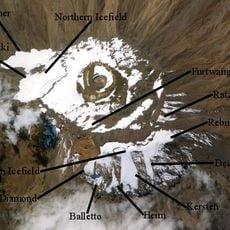
The Great Penck Glacier was an ice formation on Mount Kilimanjaro that flowed down the western slope from a higher ice field above. The frozen mass extended to roughly 4,750 meters in elevation before vanishing entirely in the 1970s.
The glacier existed as a separate ice formation until it detached from the Northern Ice Field in the early 1960s. After that separation, the frozen mass shrank rapidly and vanished completely within roughly 15 years.
The glacier's name links it to Albrecht Penck, the German geographer after whom the Penck glaciers on Kilimanjaro's western slope were named. Its neighbour to the north was the Drygalski Glacier and to the south the Little Penck Glacier, a trio of ice bodies recorded on early maps of the mountain's summit zone.
Today it is impossible to visit this glacier since it has completely disappeared, leaving only bare rock where it once existed. Visitors interested in learning about this vanished ice can ask Kilimanjaro guides who can share the mountain's glacial history.
The glacier's name links it to Albrecht Penck, the German geographer after whom the Penck glaciers on Kilimanjaro are named. Two neighbours carried related names: Drygalski Glacier lay to the north and Little Penck Glacier to the south, so three separate ice bodies once sat close together on the west slope.
The community of curious travelers
AroundUs brings together thousands of curated places, local tips, and hidden gems, enriched daily by 93,997 contributors worldwide.