Arusha National Park, National park in Arusha Region, Tanzania
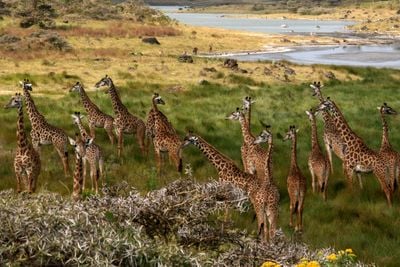
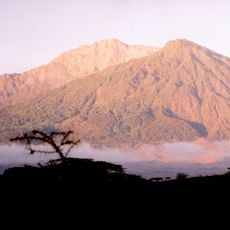
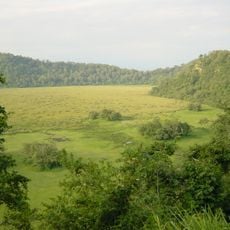
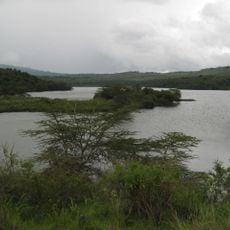
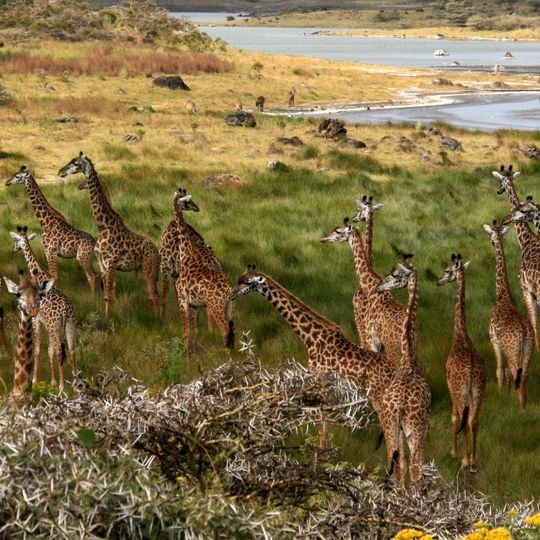
Arusha National Park is a protected area in the Arusha Region of Tanzania that spans different elevations from the base to the summit of Mount Meru. The landscape shifts between open grassland, dense forest on the mountain slope, and flatter ground around several small lakes.
The Rwa were the first inhabitants of the area. In 1876 the Hungarian Count Teleki visited Momella and noted many hippos and black rhinos. In 1907 the Trappe family settled at Momella and ranched cattle; Mrs Trappe, East Africa's first female professional hunter, gave part of the estate for a game reserve. The park was created in 1960 as Ngurdoto Crater National Park, and Mount Meru was added in 1967, when it took the name Arusha.
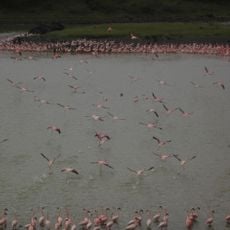
Flamingos along the shoreline areas often draw larger groups of observers, while smaller bird species forage in the surrounding scrub. Walking trails pass through sections where colobus monkeys move between the trees and occasionally rest on branches at eye level.
Paths in the lower section are accessible for shorter visits, while routes toward higher ground require more time and physical preparation. Early morning hours often provide cooler temperatures and better conditions for wildlife viewing in the more open zones.
The Momella Lakes are shallow and alkaline, not spring-fed crater pools, and their algal blooms shift colour through the year. Count Teleki, visiting in 1876, recorded large numbers of hippos and black rhinos here. The last rhino in the park was shot in 1987, and elephants fell from 16,600 in 1977 to about 900 by 1990.
The community of curious travelers
AroundUs brings together thousands of curated places, local tips, and hidden gems, enriched daily by 93,199 contributors worldwide.