William Bay National Park, National park in the Great Southern region, Western Australia, Australia
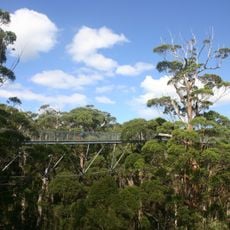
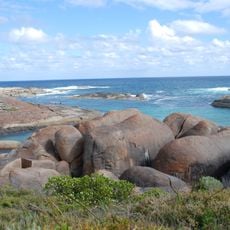
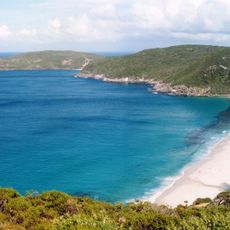
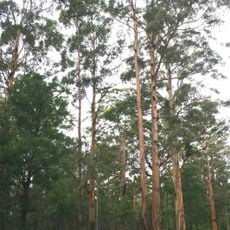
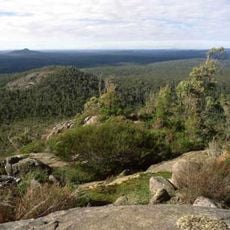
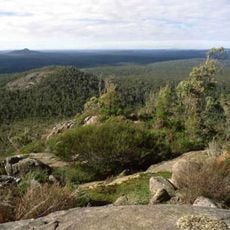
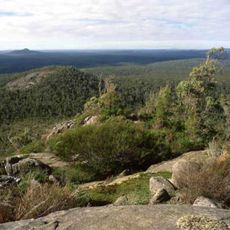
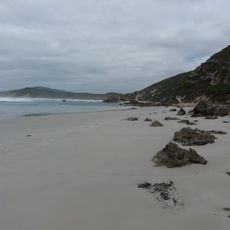
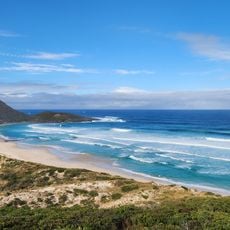
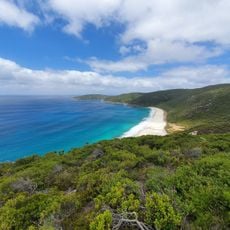
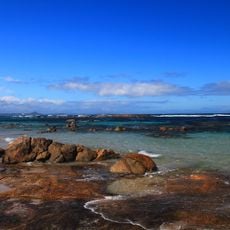
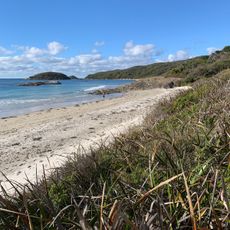
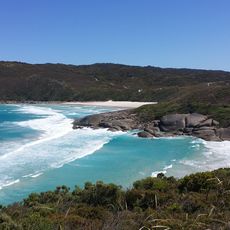
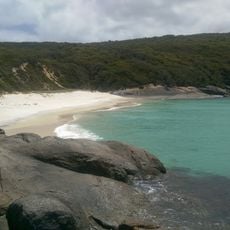
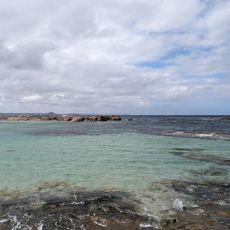
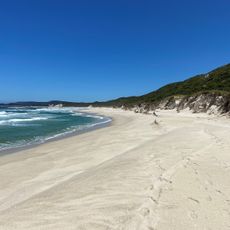
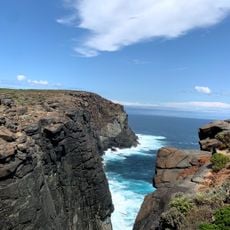
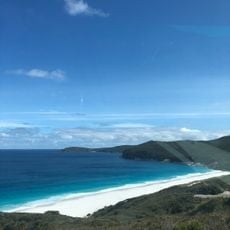
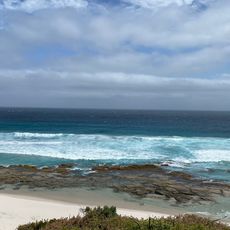
William Bay National Park covers 1,734 ha of the Great Southern coast, about 15 km west of Denmark. Its eastern shore holds Greens Pool, where granite boulders form a natural reef, plus Elephant Rocks, Madfish Bay and Waterfall Beach; the western side is wilder, with Parry Beach, Parry Inlet and Hillier Bay. Inland lie peppermint scrub, heathland, pockets of karri forest and hills with granite tors.
The park received protection in 1971 and was named after a British naval officer whose career spanned several decades of the 1800s. Its designation reflected growing recognition of the value in protecting this coastal landscape.
The park lies within the country of the Mineng people, whose presence in the area is placed at 40,000 to 50,000 years. Stone tool fragments have been found at Lights Beach, Lake Byleveld and Parry Inlet. The name William Bay, given in the 1830s by surveyor John Septimus Roe, honours the British Arctic explorer William Edward Parry, as do nearby Parry Inlet and Edward Point.
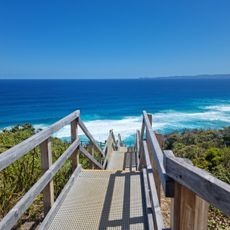
The park offers several marked walking paths connecting different bays and rock formations at varying difficulty levels. Visitors should prepare for changing weather conditions and wear sturdy footwear, as trails cross uneven ground.
The park harbors a small population of a rare spider species found nowhere else, drawing scientific interest and study. It also serves as a resting point for migratory birds traveling vast distances across the continent.
The community of curious travelers
AroundUs brings together thousands of curated places, local tips, and hidden gems, enriched daily by 93,560 contributors worldwide.