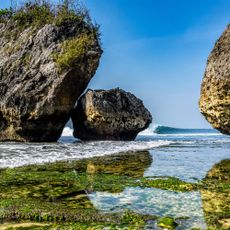
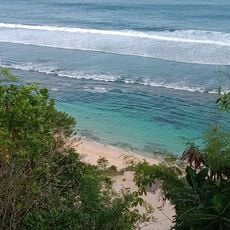
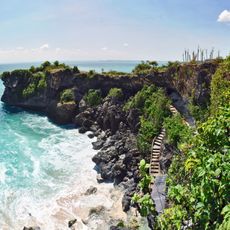
Pura Dalem Sakenan, Hindu temple in Serangan, Indonesia
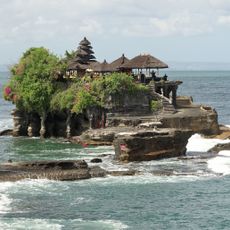
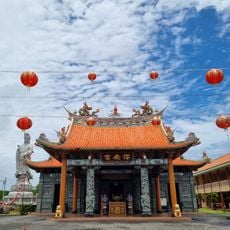
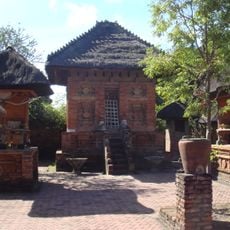
Pura Dalem Sakenan stands on the north-western shore of Serangan, about 10 km south of Denpasar. Its three courtyards are the jaba pisan, an outer yard with two large trees wrapped in black-and-white polèng cloth; the jaba tengah, entered through a candi bentar gate to the west; and the jero, reached by a paduraksa gate, where the tallest pelinggih is dedicated to Jro Dukuh Sakti. The old walls are of limestone and coral.
Mpu Kuturan, a priest who arrived in Bali in 1001 AD, founded the temple in the 10th century, around 1005. Under Sri Dalem Ktut Ngulasir of Gelgel, villagers were ordered to build a shrine at the site and named it Parahyangan Dalem Sakenan. In 1489 AD, Dalem Waturenggong and Dang Hyang Nirartha added the Sekar Kancing Gelung shrine. In 1982, villagers expanded the western part, and in 1996 reclamation began.
The temple is the focus of the Piodalan festival, held every 210 days on Kliwon Kuningan Saturday, the last day of Galungan. Pilgrims once crossed from Bali on foot at low tide through the mangroves or in colourful jukung outriggers, visiting Pura Susunan Wadon and Pura Susunan Agung before arriving here. The name Sakenan derives from Sakyamuni, the Buddha name honoured by Mpu Kuturan.
Visitors should dress appropriately, including wearing a sarong, which can typically be obtained at the site. Some areas are restricted during religious ceremonies, so it helps to check for current observances before entering restricted sections.
The original walls were constructed from limestone and coral taken from nearby coastal reefs. This material choice has been preserved through renovations over time, creating a direct connection between the structure and its natural surroundings.
The community of curious travelers
AroundUs brings together thousands of curated places, local tips, and hidden gems, enriched daily by 94,108 contributors worldwide.