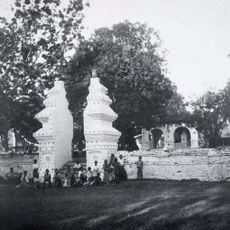
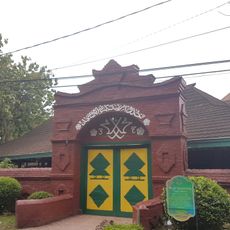
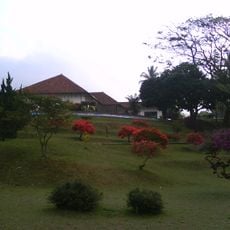
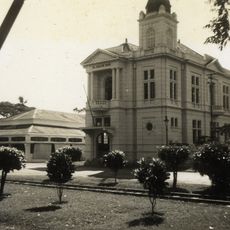
Kraton Kacirebonan, Royal palace in Cirebon City, Indonesia.
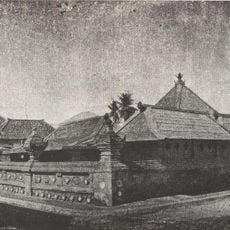
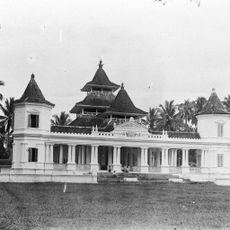
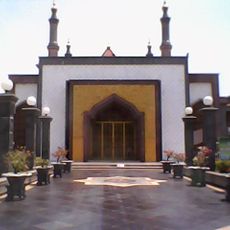
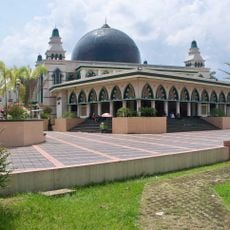
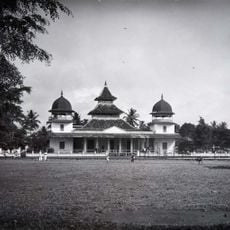
Kraton Kacirebonan is a palace complex in Pulasaren, Cirebon, built around 1807. Its main building, two rectangular Paseban pavilions with joglo roofs, a Tajug prayer house, and the Gedong Ijo (1875) are arranged on about 46,500 square meters, oriented north to south. The architecture mixes Chinese, colonial and traditional Cirebon elements, with strong European features.
Prince Raja Kanoman was stripped of his Kanoman title and exiled by the Dutch after a tax revolt, then returned to Cirebon in 1808 without the Kanoman throne. In 1807 the Dutch governor-general's Besluit named him Sultan Carbon Kacirebonan, with the title of sultan barred to his sons. After his death in 1814, his widow Ratu Raja Resminingpuri built the palace at Pulasaren with the pension she had earlier refused.
The architecture mixes Sundanese, Javanese, Islamic, Chinese and Dutch elements, with European-style forms recalling Dutch colonial official buildings. The west Paseban pavilion is a semi-open hall on eight posts and four saka guru, roofed in joglo tiles. The south wall holds a kori agung gate under a joglo roof, and the Gedong Ijo, built in 1875, faces east.
The palace is located about one kilometer southwest of another major palace in the city. Visitors can walk through different sections, with some areas being more easily accessible than others.
The complex holds a set of gamelan instruments, wayang puppets, kris daggers and war equipment kept as palace heirlooms. The site is also listed as a protected vital object, so police officers stand guard at the kraton and patrol it, with larger detachments posted during major ceremonies.
The community of curious travelers
AroundUs brings together thousands of curated places, local tips, and hidden gems, enriched daily by 94,243 contributors worldwide.