Gunung Galunggung, Stratovolcano in West Java, Indonesia
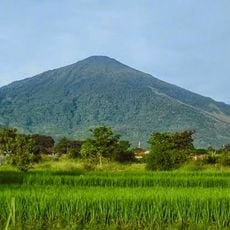
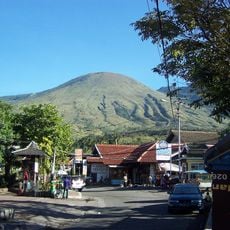
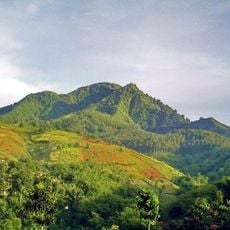
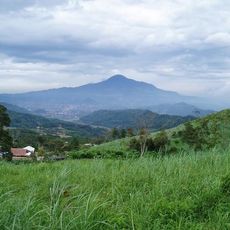
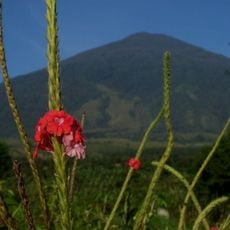
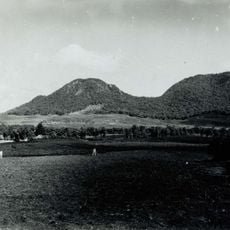
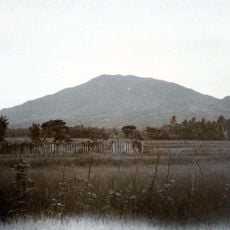
Gunung Galunggung is a stratovolcano about 17 km from Tasikmalaya in West Java. Its highest point, Puncak Beuticanar, reaches 2,240 metres, and two other summits, Puncak Dinding Ari and Puncak Dora, are reached by hiking trails. A staircase of 620 steps leads to the crater rim, and a horseshoe-shaped crater records a massive landslide.
Galunggung's first documented eruption, in 1822, produced pyroclastic flows and lahars that killed 4,011 people and destroyed 114 villages. The last major eruption began on 5 May 1982 and lasted until 8 January 1983; about 18 people died, mostly from indirect causes such as traffic accidents and starvation. Ash from that eruption disabled all four engines of British Airways Flight 9 on 24 June 1982, forcing an emergency landing in Jakarta.
The name Galunggung was formerly written Galoen-gong; the mountain gives its name to the Ten Thousand Hills of Tasikmalaya, the hummocky debris-avalanche deposit on its lower slopes. Houses were built on these hummocks because they stood above the paddy fields, free of mosquitoes and rats, and offered defence against hostile people.
The climb takes around two to three hours and follows partly steep stairs and paths through the forest. Vendors at the crater rim sell fresh vegetables such as fern shoots and watercress that grow on the fertile slopes.
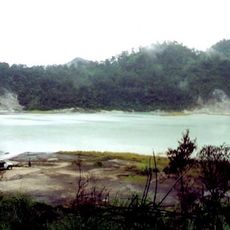
A tunnel completed in 1994 drains water from the crater lake and prevents overflow that could trigger mudflows. The drained water irrigates rice paddies and fish ponds in surrounding villages, turning the resource into farmland supply.
The community of curious travelers
AroundUs brings together thousands of curated places, local tips, and hidden gems, enriched daily by 94,118 contributors worldwide.