Cangkuang, Hindu temple in Garut, Indonesia
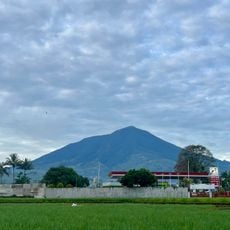
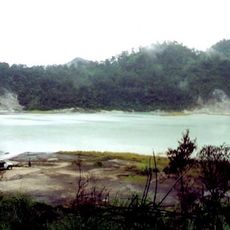
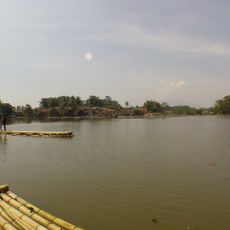
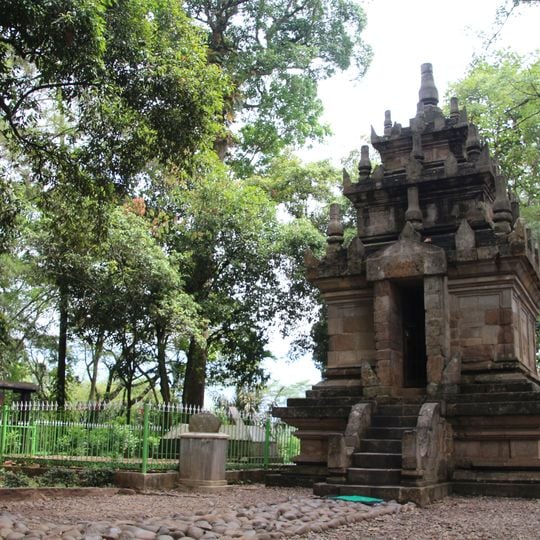
Cangkuang is a small Hindu shrine on an island in the lake of the same name near Garut in Indonesia. The stone structure rises over several levels with a central chamber and a slender tower, surrounded by rice fields and water.
Researchers uncovered the structure in 1966 and dated it to the 8th century. It remained as the only Hindu example in the entire Sunda region while other temples disappeared.
The name Cangkuang comes from the pandan plant (Pandanus furcatus) that grows around the tomb of Embah Dalem Arief Muhammad, the ancestor of Kampung Pulo. Its leaves are used to make hoods, mats and wrappers. The island also preserves the traditional Sundanese settlement of Kampung Pulo, whose residents maintain the tomb and the temple.
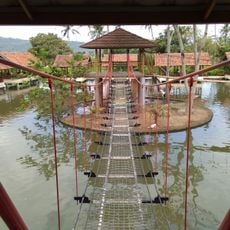
You reach the island by bamboo raft, poled across the shallow lake by a local. The path on the island passes the old houses and leads to the shrine, which is open during daylight hours.
The Shiva statue inside the main room is 62 cm tall and damaged: both hands are broken off and the face is worn flat. On its pedestal a Nandi head is carved, the bull that identifies the figure as Shiva. The temple's name comes from the pandan, Pandanus furcatus, that grows around the island.
The community of curious travelers
AroundUs brings together thousands of curated places, local tips, and hidden gems, enriched daily by 93,897 contributors worldwide.