Wayang-Windu, Active volcano in West Java, Indonesia
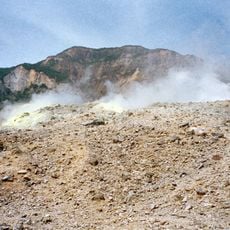
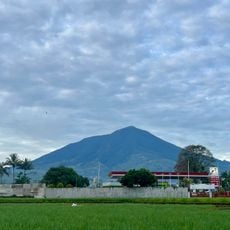
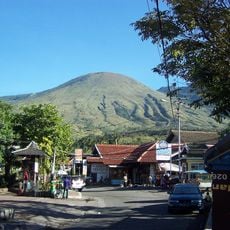
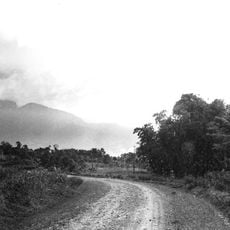
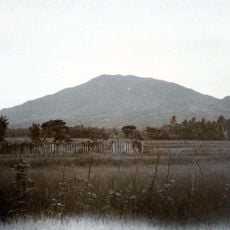
Wayang-Windu is a twin volcano made up of Mount Wayang and Mount Windu, located just east of Pangalengan in Bandung Regency, West Java, about 40 km south of Bandung. Mount Wayang has a 750 m wide crescent-shaped crater containing four groups of fumaroles, while Mount Windu has a 350 m wide crater. The complex sits on the hydrological divide between Java's northern and southern river basins.
The volcano formed through repeated eruptions spanning thousands of years, shaping the region's geographical structure. This natural process created a natural dividing line between major water systems and continues to influence the landscape today.
The name Wayang means "shadow" in Indonesian, while Windu refers to the Windu tree; the twin peaks are named separately. The eastern slopes feed the Citarum basin and the western slopes the Cilaki basin, so streams from the same complex reach both the Java Sea and the Indian Ocean. The area is an active geothermal project, and fumaroles in Wayang's crater still vent steam.
The best time to visit is during the dry season from May to September when conditions are most favorable for exploring. Access to the volcano is best arranged through the nearby town of Pangalengan, which serves as the main gateway to the area.
The two craters differ in size: Wayang's crescent-shaped crater is 750 m wide and holds four groups of fumaroles, while Windu's crater measures 350 m across. The complex also sits on the hydrological divide of Java, with eastern slopes draining to the Citarum and the Java Sea and western slopes to the Cilaki and the Indian Ocean.
The community of curious travelers
AroundUs brings together thousands of curated places, local tips, and hidden gems, enriched daily by 93,182 contributors worldwide.